Showing posts with label families. Show all posts

Thursday, November 22, 2018

In search of Thanksgiving peace


That's the point of Thanksgiving, isn't it? To break bread together, to join with each other over a table of plenty (or at least, we hope, "enough"), to mend fences, to heal wounds, and to come together.

But we live in a rough time. Post-election, wounds are still raw. Gains and losses are still bitter. And many peoples' Thanksgivings will be times of strife, if we're not careful. So, then, what to do?


I'd hope that we'll seek the more excellent way (I Corinthians 12:31), or in other words, the way of love. I started this month with All Saints and All Souls Day references to honoring our ancestors. Yet for many younger people the necessity of dealing with still-living ancestors and/or elders can become quite a trial.


The reverse quite often is true, too. Older people may have little patience with the things their younger family members value. This is mostly because they don't understand them, and may even be afraid of them. But they, too, need to remember the way of love.


Both sides seem all too short on respect for the other, too much of the time. But the way of love is a way of respect. It's an attitude that sets aside the assumptions of failings and seeks out, then abides in the places of agreement. A good start is simply to listen. To seek to hear, more than to be heard.


Only by setting part of our pride, our sense of controlling the situation, and our drive to force others to agree with us, do we find a place of mutual acceptance and peace. It behooves us to remember Wayne Dyer's thought.


Only when we're willing to step back from conflict can we truly be at peace with each other. Unfortunately, the hosts too often have to intervene with "rules of conduct in our house." One of my Beloved's elders banished all talk of religion and politics from her household on Thanksgiving. It worked, because they all respected Grandma.

But however we do it, we must remember and honor the soul-work of the table, the giving work of the cook(s), and the purpose of this day.


All of us have more to be thankful for than we have reasons to despise each other. Let us strive to remember that, and to act on it.

IMAGES: Many thanks to The Way International for the "Breaking Bread Together" graphic; to Oprah's Pinterest page, for the quote-image from Iyanla Vanzant; to Quotemaster, for both the quotes from Gertrude Stein and from Gloria Steinem; to QuotePixel for the prayer of St. Francis of Assisi; to Brainy Quote for the wisdom from Wayne Dyer; and to the World Food Program USA on Pinterest, via World Vision and its HungerFree initiative for the Laurie Colwin quote. Many thanks to all of them!

Monday, November 20, 2017

For My Family

Day Two: Grateful for my Family

We humans are shaped and often defined by our families, for both well and ill. We can inherit everything--and anything--from our forebears:

  • Genetic vulnerabilities or resistances to diseases
  • Family recipes (be they sublime--or dreadful!) 
  • Attitudes (political or otherwise)
  • Catchphrases (do you ever hear your parent's or grandparent's voice coming out of your own mouth?)
  • Childrearing practices (boy, can that be a two-edged sword! For you, and your kids!)
  • Knicknacks (from worthless dust-collectors to priceless heirlooms)
  • Traditions, (for holidays, special occasions, or anything at all)
  • Wealth (along with its entanglements.)
  • Poverty (different kinds of entanglements, but at least as many, here)
  • Or, all too often, dysfunctional patterns that over time can take on the likeness of a "generational curse," if we're not careful, thoughtful, and brutally self-reflective.


Blessings? Curses? A little of both? Yes. Families can be all of those. They even can be all of those at the same time.

If you regard your family-of-origin with little short of horror, I get it.

If you see them mainly as a pain in the patoot but you love them anyway, you're in good company throughout most of the planet.

If you never knew them, I offer my deepest condolences--and pray you may be empowered to surround yourself with the kind of friends who love you like the most positive kind of brothers and sisters.

But if you're like me, you not only remember your siblings and parents--you still have at least some of them around to deal with, care about, and/or worry about.

A bit rude, maybe, but more accurate than not.
In my case I have a house I have almost reclaimed from the hoarder-esque piles of inherited household goods after some eight estate liquidations since 2005, a recently-turned-93-year-old father, a Beloved who lost his 89-year-old mother this year, and two adult children with a variety of strengths and challenges--plus assorted canine, feline, piscine, and even Eublepharine household members with challenges of their own.

They are, in many ways, the reason I get up in the morning (well, them and the novel!), the delight of my life, and also the sand in my gears. I wouldn't trade them for anything, and I know I'm incredibly lucky to have them. Every single one I've lost, I've lost under extreme protest. Every single one I haven't yet lost, I cherish with all my heart.

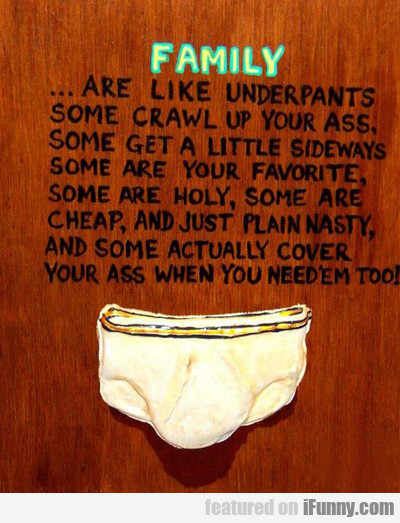
IMAGES:  The "Seven Days of Gratitude" design is my own creation, for well or ill. If for some reason You'd like to use it, please feel free to do so, but I request attribution and a link back to this post. Many thanks to Boardofwisdom, via Your English Library's summary page about About a Boy, for the quotation image from Manwadu Ndife, and to iFunny for the graphic about family being like underpants.

Wednesday, October 12, 2016

Cultural exchange, versus cultural appropriation

According to some people, I have an unsavory past.

Well, not me, personally. I've never committed any crime worse than exceeding the speed limit, and I'm pretty sure that's true for most of my immediate family as well. We don't tend to be colorful in that way.

What lurks in your family tree?

But I have both English and German roots, and the last several generations of my European-American ancestors have lived in the United States. In the eyes of many people around the world, those simple facts make me and my family complicit, at least by association, with centuries of oppression, racism, and perhaps even genocide.

Not much I can do about it, no matter what my ancestors thought or did. But in the minds of some, my ancestry and presumed understandings make me a suspect interpreter of culture. How dare I even try to make art about any culture but my own? Isn't that tantamount to cultural appropriation?

Yikes! Um, well . . . no, actually. For good reason.
First, like many people, I've tried to live my life in as fair and unbiased a way as I can, but the fact is that sometimes we don't realize what we've done or said (or what those things mean to others--see below) until we've had our consciousness raised. Every one of us is a product of our culture, and it's only through experience that we can learn more appropriate approaches and frames of reference.

Artist Kristen Uroda created this image for NPR, to help convey the concept of a frame of reference. It's also an illustration of my point that art can help us understand our world

In other words, none of us will get it right 100% of the time. But cross-cultural understanding can be built, even by unsavory characters such as me. It requires mutual respect and openness, and patience with each others' mistakes.

Why try? When we don't understand something, our brain still tries to make sense of it. That's an innate response. We don't always get it right, because synthesizing from impressions and separate events is an inaccurate process. But the human brain seems hard-wired to try.

I've always seen artists (in all of the arts disciplines) as crucial to the process of building cross-cultural understanding--and in our ever-shrinking world, where globalization affects lives everywhere, developing more and better tools for cross-cultural understanding is becoming ever more vitally important.

Yet anytime we consider a cultural exchange, there tends to arise the concern over cultural appropriation.

Cultural  Exchange is a healthy, desirable, increasingly necessary function in society. Governments, organizations, and businesses are wise to foster it whenever possible.


Cultural Appropriation is a perversion that wounds, and inhibits mutual growth. It is what happens when members of a dominant culture ignorantly or disrespectfully use racial stereotypes or the outward symbols of a less-dominant culture for its own gain or racist purposes. Unfortunately, people who look like me can stumble all too easily across this line. Consider these examples:


But we've already established that we don't get it right 100% of the time, especially when we encounter an unfamiliar culture. How and where do we draw the line?

First must come the awareness that there is such a thing as a dominant culture. Moreover, membership in a dominant cultural group automatically bestows privilege. When you ignore privilege, you lose an essential perspective that is important for helping you see where that line falls.

That's why people who look like me, and whose ancestors came from the places my ancestors did, are automatically suspects, when it comes to cultural appropriation. Whether we want to be or not, and whether we think it's right or not, we're privileged. THAT'S my "unsavory past," noted at the top of this article. When you automatically have had privilege all your life, it looks "normal."


And it's really easy to ignore, until you've had your consciousness raised to the fact that everyone else who doesn't look like you has to evaluate situations based on your privilege, and work around it.

After that, drawing the line gets a lot easier. Cultural exchange is mutual. It enriches members of both cultures. Cultural appropriation demeans members of one culture for the amusement or gain of more-privileged members of another. Ultimately, it comes down to RESPECT. Without it, every single one of us is an unreliable witness.


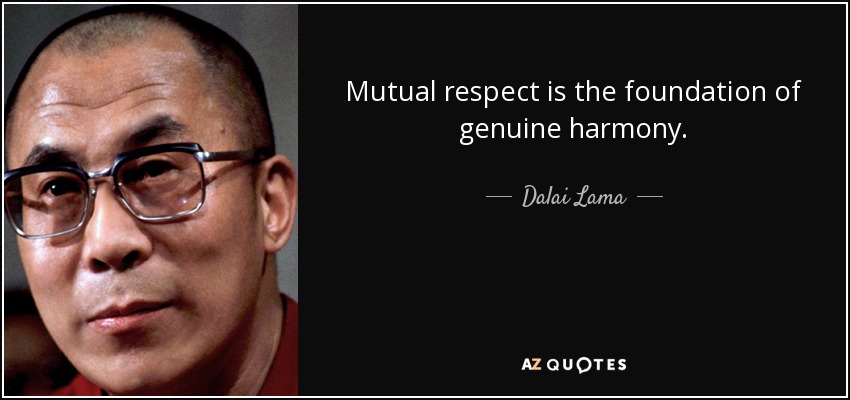
IMAGES: The elaborate family tree chart by Pietro Paolini is from the Castello di Nipozzano in Tuscany, courtesy of The Independent. Many thanks to NPR and its Invisibilia shows, for Kristen Uroda's simultaneous illustration of two of my points. I am grateful to Top Famous Quotes for the Abbe Pierre quote and image, to Iffat Karim and The Rattler for the "Native Americans" example of cultural appropriation, to illustrator Terry Tan, whose illustration, "Cinco de Mayo/Drinko" was posted in a very good article by Matt Moret in ThePittNews, and to Wikipedia for the poster image from a minstrel show in 1900. Many thanks to The Orbit, for the nutshell definition of privilege (the essay that goes with the image is a good one, too). And finally, many thanks to A-Z Quotes, for the Dalai Lama image and quote.

Monday, November 2, 2015

Days of the Dead: All Souls Day

I was told at some point by somebody that the first of the Days of the Dead, All Saints Day, is focused primarily on memorials of loved ones who lived with us, became adults, and maybe even are our ancestors.

An unidentified woman sits by the decorated tomb of a relative in San Antonio Aguascalientes, Guatemala. (AP/Moises Castillo)

The second day, All Souls Day, shifts the focus to the babies, the children, the innocent spirits we lost too soon. I cannot imagine any grief greater than losing one's child, and I thank God every day that's one terrible sorrow I have so far been spared.

Unfortunately, as I write this all too many parents and grandparents--in Kansas City, and everywhere else--are grieving just such losses. Wherever there is strife, poverty, illness, famine or terror, the children suffer the most. The world is full of evils, and it has been a bad year for far too many children.

For me, that category of "innocent spirits" also must include beloved pets and other animals: pure spirits who have enriched life on earth, and who are gone all too quickly. I do not see this attitude as a belittlement of lost children, simply an acknowledgement that profound losses may come from many different quarters. For most of the people in my life, their companion animals are cherished family members, and I cannot see that as anything but appropriate.

Oh, and--don't try to convince me that animals don't have souls. I have no patience with such claptrap, no matter how many famous persons or theological authorities you care to quote. If they said that, they're flat wrong, and probably never paid proper heed to the animals in their lives, or they would know better. Even the Bible agrees with me (if there are no animals in Heaven, how can Jesus come from there on a white horse in Revelation? I rest my case).

My hope is that today's post will encourage anyone who reads it to live more mindfully with those they love--be they humans, or some other species. Cherish the time you have with them, no matter who they are. And be sure they know how you feel!


Blessings to you.

IMAGES: Many thanks, once again, to NBC Latino's 2012 feature on the Days of the Dead, for the beautiful photo from Guatemala. I also want to thank Judy Jacintho's "Quotes" Pinterest board for the image and quote about spending time with loved ones, and The Better Future's website for the quote about grief.