Showing posts with label Women's History Month. Show all posts

Monday, March 25, 2019

Three voices from three centuries make an important point

The Artdog Quotes of the Week

Women's History Month is coming to an end soon. Perhaps it's time to make some evaluations, based on the words of strong women from history.

Do you feel well-represented?


How do you think today's political parties measure up, by this standard?


How well do you think our international agreements align with this principle?


These are three different women from three different time periods. But each reminds us that women matter enormously.

I do not believe we can settle for having our needs left unmet in the name of "not the right time," "strategic compromise," or some imagined "greater good" that does not include good for us.

How much of that have you seen in your own life?

IMAGES: Many thanks to AZ Quotes, for the words of Abigail Adams, to Nomadic Politics, for the quote from Susan B. Anthony, and to AZ Quotes once again, for the quote-image featuring the remarkable Afghan leader Fawzia Koofi. Many thanks to all!

Monday, March 4, 2019

How quotes about women in the arts . . . mostly weren't.

The Artdog Quote(s) of the Week

In recognition of Women's History Month, I thought I'd focus on quotes about women in the arts as this month's theme.

Yeah, try Googling that phrase under "images." The quote that seemed to come back with just incredible frequency was this one:


Um, EXCUSE ME, but what does that have to do with Women in the Arts?

One image that came up near the top of the search results is a poster visible on the Tate website (but not available for reposting) about the very tongue-in-cheek "advantages" of being a woman artist in 1988. "Advantage" #1, "Working without the pressure of success," gives a taste of how the list is oriented.

Then compare a couple of other quotes that came up several times:


Okay, that's fairly hopeful, if dated, but then there's this:


Well, as they used to say, ain't that a kick in the head? I don't think either gender comes off looking too good, in Beecham's estimation. In the age of Harvey Weinstein, however, it's hard to say he was inaccurate about the existence of "unscrupulous men."

Number one that came up was from an article about conceptual artist Jenny Holzer, and it's not exactly a paean of optimism, either:


I . . . sorry. After spending a stimulating month of February reading engrossing fiction by women such as Becky Chambers, Diana Wynne Jones, Martha Wells, Jennifer Foehner Wells, and Nnedi Okorafor, and having recently delighted in the artwork of Simini Blocker, Karen Ann Hollingsworth, and Jody A. Lee, not to mention amazing new artwork being produced (but not yet posted online) by Lucy A. SynkI actually felt pretty good about women in the arts.

I genuinely thought I'd find a more optimistic range of quotes. Frankly, sisters, we owe ourselves a better set of quotes. What's on offer is pathetic.

Are things perfect? No. Humans aren't, so human things won't be. But things don't have to be uniformly bleak. Women in ALL of the arts are doing amazing things. If no one else is talking about it, then we ought to begin.

IMAGES: The Helen Rowland quote about bachelors is from Quote HD. So is the Hedy Lamarr quote. The Thomas Beecham quote is courtesy of Quotefancy. The "Rules you live by" quote-image comes from a thoughtful essay by Lauren C. Byrd on her "Make Art History" blog.

Tuesday, February 28, 2017

Essential Artemesia

The Artdog Images of Interest

I'm celebrating "Women's ART History Month" this March, with a new "Image of Interest" post each week that features a small collection of images and a few biographical snippets about some of my favorite women artists.

These women made their mark in what has been for centuries a world that belonged mostly to men. Some are better known than others, but I hope you'll enjoy the work of all.

Where else could I start, but with Artemesia Gentileschi?

Artemesia Gentilesci's Self Portrait as the Allegory of Painting, 1638-39.

Artemesia is widely acknowledged as "the most important woman painter" of her time, the only woman admitted to the Academia dell'Arte del Disgeno in Florence. Typically of the male chauvinists who dominated the art history field for centuries, Artemesia's paintings were not even recognized as her own until late into the 20th Century.

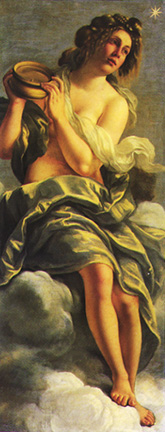
It's crazy to realize, but as far as we know, Artemesia's first-ever solo show didn't happen till 1991 (this is really pushing the idea of "better late than never" to previously-unimagined lengths). It was held at Casa Buonarroti in Florence, the same place where Michelangelo Buonarroti the Younger commissioned her to paint Allegory of Inclination in 1615.

Artemesia Gentileschi's Allegory of Inclination, 1615, painted for Michelangelo Buonarotti the Younger.

Taught to paint by her father Orazio Gentileschi (and unfortunately also by a lowlife slime named Agostino Tassi), Artemesia was influenced by both Orazio's work, and that of his friend Michelangelo Merisi da Caravaggio, as attested by her marvelous use of the chiaroscuro technique, and of tenebrism in her paintings.

Infamously, the story of how she was a rape victim always seems to get a lot of play in her biographies. Partly this may be because it is one of the best-documented aspects of her life. The horrifying transcripts of the months-long trial have survived. But mainly it's the sensational nature of the story. Many other facts about her life have faded into obscurity in most bios.

Judith and her maidservant really put their backs into their work, in Judith Slaying Holofernes, 1614-20. 
One thing that hasn't faded, however is the vivid and poetically ageless revenge she took on men (especially in the person of Holofernes--could her model have been Tassi?) in her paintings. 

According to one biography, Judith Slaying Holofernes was painted for Cosimo II de’ Medici, the Grand Duke of Tuscany, who hid the painting from view as he believed it was "too horrifying to behold." I've got to say that the expression on Judith's face probably does have a tendency to make the cojones shrivel.

Artemesia included a glimpse of old Holofernes's head and a rather badass-looking sword, when she accessorized Judith and her Maidservant, 1613-14

Even before the sordid rape episode, her Susanna and the Elders (a masterwork produced when she was 17) makes it clear she already knew all too well what it felt like to be objectified.

Anyone who doesn't cringe in empathy with poor Susanna in Artemesia's Susanna and the Elders, 1610, has only ever been on the oglers' side of the interaction.
A true survey of her artwork reveals, of course, that she panted a far greater range of subjects than the battle of the sexes. Most of her subjects, indeed, were dictated by her patrons, but they still mostly feature rather-more-bold-than-usual women. The art critic Roberto Longhi wrote, "There are about fifty-seven works by Artemisia Gentileschi and 94% (forty-nine works) feature women as protagonists or equal to men." Here are a few more wonderful pieces, to give you a glimpse of her range.


Artemesia's The Penitent Magdalene, 1617-20, looks to me as if she might be having second thoughts. The color of her dress, by the way, is sometimes called "Gentileschi Gold." Artemesia signed the painting on the back of Mary's chair; as she often did during this period, she chose to use her uncle's surname, rather than that of her father or her husband.

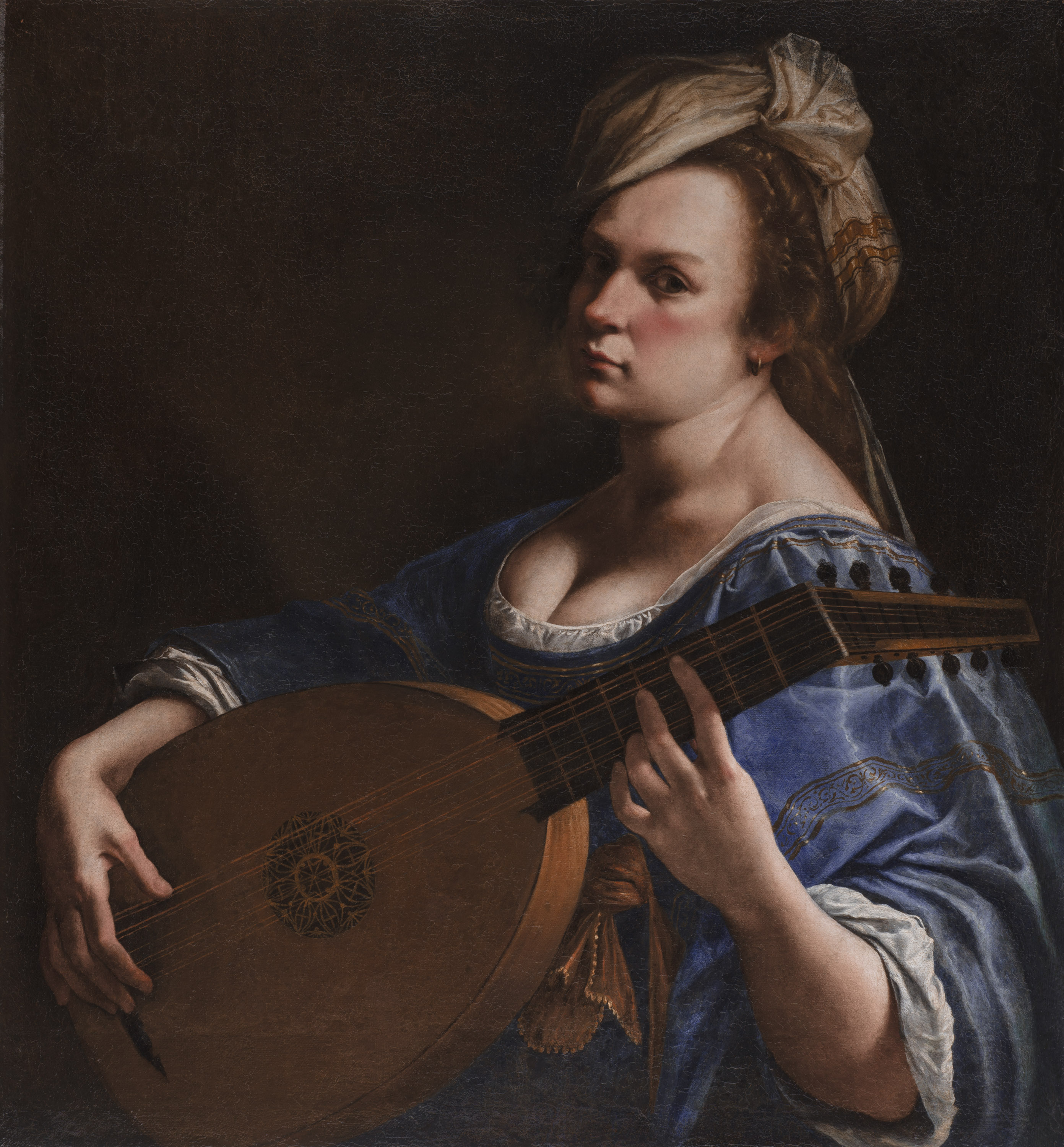
Did Artemesia play the lute? Maybe. She appears to have a clue about fingering in this Self-Portrait as a Lute Player, 1615-17.

Let's wrap with another later work, Clio, the Muse of History, 1632. As well she should, Clio appears undaunted by the weight of history ("muse of," after all). So too, Artemesia's work has stood up quite well to the test of time. 

IMAGES: Many thanks to Wikipedia and the Royal Collection (of the British Royal Family) for the self-portrait image of Artemisia at work, to Art History Archive, for the Allegory of Inclination image, to Wikipedia and the Uffizi Gallery in Florence for the image of Judith in her moment of gory triumph, and to Wikipedia and the Palazzo Pitti in Florence for the image of the wickedly-accessorized Judith-plus-one; also for the painting of Mary Magdalene in the golden gown. Many thanks to Wikipedia and the Web Gallery of Art for the image of Susanna and the dirty old men, as well as the same duo for the photo of the self-confident Clio (the painting is in the Cassa di Risparmio di Pisa, a savings bank in Pisa, Italy). Finally, many thanks to Wikipedia and The History Blog for Artemesia's self portrait with the lute; the painting itself is currently in the Wadsworth Atheneum in Hartford, CT.

Monday, March 28, 2016

Choose Wisely, O Queen! Artdog Quote of the Week

How often our circumstances try to hand us ready-made answers, about how we should choose what path we will take! But are those paths the right ones for us?

Do they serve our needs and help us blossom into our true calling (which is, I am convinced, the best way of giving ourselves to our world), or are they the manipulations of others, designed to serve other ends?
We have a choice each day. We can become and remain our best, truest selves--and we can be a profound blessing to others in the process. But only if we heed our calling and remain true to ourselves.

Throughout the ages, both women and men have been told what we must do, how we must behave, what priorities we should have. Some of these messages truly are the wisdom of the ages. Sometimes we really should hold certain truths to be self-evident.

Other "truths"? Not so much. We have been endowed with the ability to think: we must always keep refining the ability to discern our best truth from the tide of "shoulds" that bombard us each day. This is true for women, for men, for creative people of all types.

We must each be our own champions, or we'll always remain buried in the landslide of other peoples' value-judgments.

IMAGE: Many thanks to Queen of Your Own Life's "Queenisms," via Seline Shenoy’s “The Dream Catcher” blog!

Monday, March 21, 2016

Why our Paradigm for Justice is Flawed: Artdog Quote of the Week

We don't have to look far in our world to find human misery. It walks the streets of every city and haunts the byways of rural areas. It is overwhelming Europe and convulsing the Middle East and Africa most notably--but it is everywhere.
Vengeance is a poor follow-up to misery, for it only produces more misery and more lust for vengeance in an endless, mindless cycle.

My prayer is that we may find a way to break out of that destructive loop and seek a new paradigm. But the current political climate does not seem much inclined to foster any such thing.

How do we muster the courage and strength to stand up and say, "ENOUGH"?

IMAGE: Many thanks to Quotes Wave for this image!

Monday, March 14, 2016

What is your definition? Artdog Quote of the Week

March is supposed to be Women's History Month, so now that I'm back online I thought I'd follow up February's "social justice" theme with some thoughts on the subject by wise women.
How do you work for justice, in order to keep the peace? What are your definitions of "peace" and "justice"? Around whom do you draw the circle of inclusion?

IMAGE: Many thanks to QuotesGram for this image!