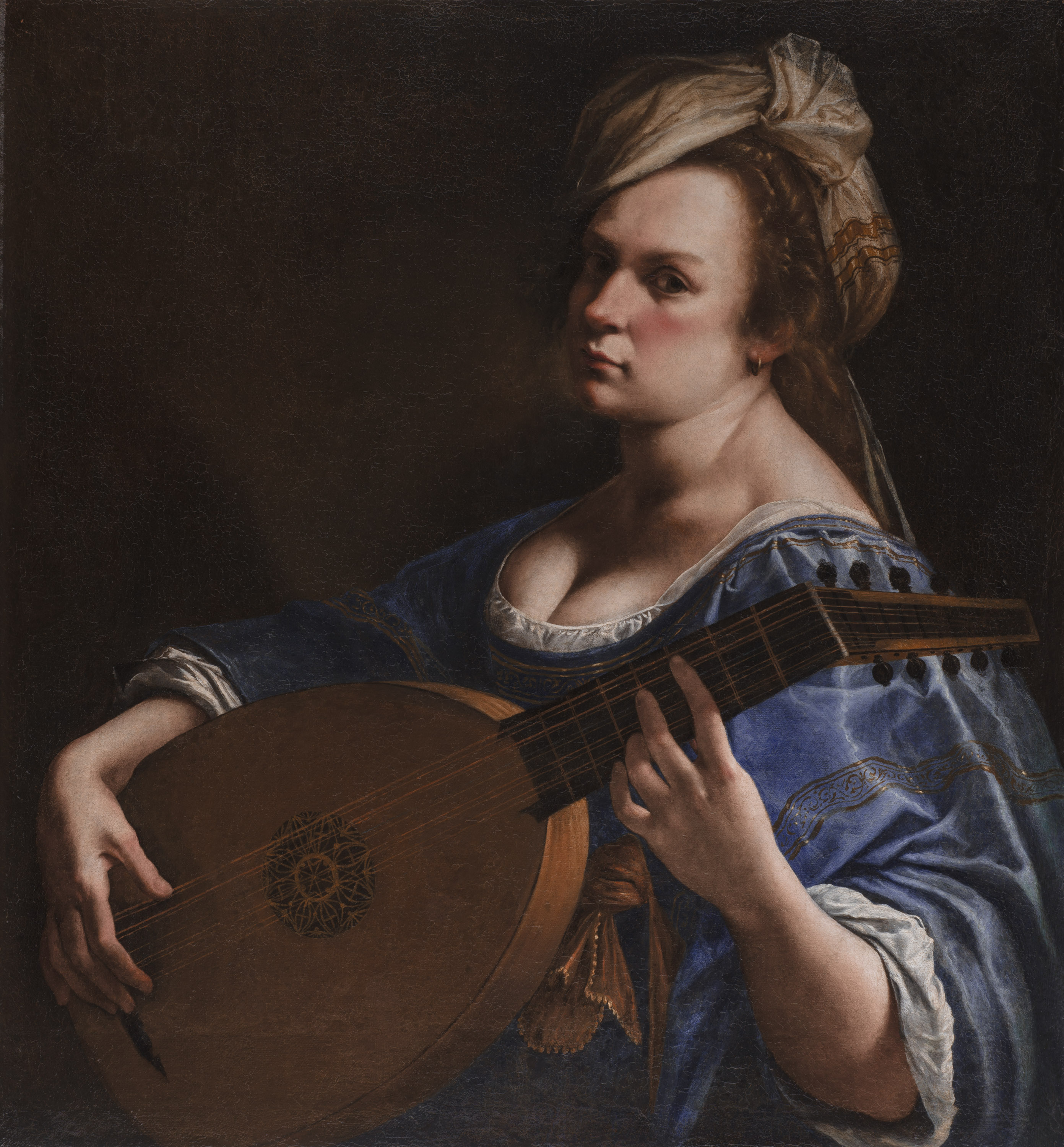
In preparing my recent post about the Baroque artist Artemisia Gentileschi, I necessarily spent some time thinking about her experiences with rape and other forms of exploitation (and how she processed those experiences into her powerful paintings), including absolutely outrageous abuse at the hands of the court during her trial.
That, in turn, led me back to "rape culture." All the classic abuses present in Artemesia's case--the minimization of the offense, the victim-blaming, the publicly abusive treatment of an already-traumatized young woman--can still all too often be found in rape or sexual harassment cases today.
What is "rape culture," you might ask? There are variations on the definition, but it all boils down to a culture-wide normalization of violence against women. It's a situation in which every encounter carries the potential for danger.
"Normalization" means no one's really that surprised when it happens . . . again. Or that it happens mostly to women, children, the mentally disabled, trans, or gender non-conforming individuals (perceived as "weaker").
It means people make crude jokes about it, even while acknowledging "yeah, it's bad to do that." The asymmetrical balance of power and the pain inherent in the situation can also result in more "sane" humorous takes--with the emphasis on the pain.
It means a cultural norm that allows adults to give children unwanted hugs or kisses and demand that they accept the treatment--thereby training them that boundaries may be transgressed when one party has more power than the other.
Normalization is a climate in which sexual violence can frequently be portrayed in entertainment media, sometimes as "edgy." All too often, rape-culture-inured audiences find it entertaining in a sexually provocative way.
The same line of thought minimizes the transgression and excuses the aggressor: "He couldn't help himself." "She led him on."
Normalization places the onus on the victim to avoid the danger: "She shouldn't have been drinking." "She was asking for it." "She shouldn't dress like that," or "She wore that short skirt." The logical extension of "she should have dressed more modestly" is that we end up in a niqab. (Oh, but those eyes--so provocative! Surely she must be asking for it!) My point? You can never win that argument by giving in to the (il)logic.
Another classic line: "She shouldn't have been walking there." Is it really acceptable for there to be some parts of one's own hometown were one feels unsafe? More: is it acceptable for some to feel even more unsafe than others?
After one of the all-too-frequent mass shootings in recent years, I remember reading a letter to the editor of my local paper. The author, a man, wrote about how terrible he thought it would be if (from fear of terrorists) he were afraid to go certain places or wear certain types of clothing (to avoid making himself a target).
"Ha!" I thought. "Welcome to every woman's world!"
Both Margaret Atwood and Gavin deBecker have been credited with an observation that could be used as a chilling summation of how things work, in a rape culture. Certainly it echoes Donald Glover's theme above. They said:

Rape culture: is it really acceptable to live like this?
IMAGES: Many thanks to Wikipedia and the Web Gallery of Art for the photo of Artemesia's wonderful painting, and to Matt Bors and The Nib for the cartoon about the hazards of dating. Many thanks to Donald Glover via Rasheeda Price's "Being a Woman" Pinterest board, for the "crazy boyfriend" joke. For the full story about Ted Cruz and his daughter, I'm indebted to The Daily Caller. Many thanks to Yogesh P. Bhadja's Tikdom.TK post "Cinema" for the still from The Isle. I appreciate the Australian ABC News "Explainer," for the photo of three niqab-clad women (the article that went with it, about traditional types of clothing is also fascinating). Many thanks to The Huffington Post for the "scary alley" photo, from their thought-provoking article, "Visiting a Rough Neighborhood can Influence Trust, Paranoia," and to Boldomatic for the graphic of the Atwood/DeBecker quote.
 |
| Artemesia Gentileschi's 1610 painting Susanna and the Dirty Old Men (Okay, so officially it's Susanna and the Elders) eloquently captures how if feels to be ogled as a lust-object. |
That, in turn, led me back to "rape culture." All the classic abuses present in Artemesia's case--the minimization of the offense, the victim-blaming, the publicly abusive treatment of an already-traumatized young woman--can still all too often be found in rape or sexual harassment cases today.
What is "rape culture," you might ask? There are variations on the definition, but it all boils down to a culture-wide normalization of violence against women. It's a situation in which every encounter carries the potential for danger.
 |
| Cartoonist Matt Bors captured the dilemma in this 2014 panel. |
"Normalization" means no one's really that surprised when it happens . . . again. Or that it happens mostly to women, children, the mentally disabled, trans, or gender non-conforming individuals (perceived as "weaker").
It means people make crude jokes about it, even while acknowledging "yeah, it's bad to do that." The asymmetrical balance of power and the pain inherent in the situation can also result in more "sane" humorous takes--with the emphasis on the pain.
 |
| Donald Glover offers humor for a moment when "If I can't find a way to laugh I might go crazy." |
It means a cultural norm that allows adults to give children unwanted hugs or kisses and demand that they accept the treatment--thereby training them that boundaries may be transgressed when one party has more power than the other.
 |
| On the campaign trail last year Ted Cruz and his daughter Caroline gave us an unintentional example of how even a well-meaning adult can ignore a child's signals. Cultural norms can be insidious when they teach that it's okay to ignore boundaries (such as personal space). |
Normalization is a climate in which sexual violence can frequently be portrayed in entertainment media, sometimes as "edgy." All too often, rape-culture-inured audiences find it entertaining in a sexually provocative way.
 |
| A still from The Isle, a Korean film that explores some of the darker human passions. |
Normalization places the onus on the victim to avoid the danger: "She shouldn't have been drinking." "She was asking for it." "She shouldn't dress like that," or "She wore that short skirt." The logical extension of "she should have dressed more modestly" is that we end up in a niqab. (Oh, but those eyes--so provocative! Surely she must be asking for it!) My point? You can never win that argument by giving in to the (il)logic.
 |
| Modesty, cultural norms, and a long history result in some women feeling much more comfortable when they are as hidden from others' view as possible. |
Another classic line: "She shouldn't have been walking there." Is it really acceptable for there to be some parts of one's own hometown were one feels unsafe? More: is it acceptable for some to feel even more unsafe than others?
 |
| Would you be afraid to walk down this alley by yourself? Or would you walk a much-farther distance to avoid it, even if you were in spike heels? Risk-evaluation is an everyday calculation for many of us. |
After one of the all-too-frequent mass shootings in recent years, I remember reading a letter to the editor of my local paper. The author, a man, wrote about how terrible he thought it would be if (from fear of terrorists) he were afraid to go certain places or wear certain types of clothing (to avoid making himself a target).
"Ha!" I thought. "Welcome to every woman's world!"
Both Margaret Atwood and Gavin deBecker have been credited with an observation that could be used as a chilling summation of how things work, in a rape culture. Certainly it echoes Donald Glover's theme above. They said:

Rape culture: is it really acceptable to live like this?
IMAGES: Many thanks to Wikipedia and the Web Gallery of Art for the photo of Artemesia's wonderful painting, and to Matt Bors and The Nib for the cartoon about the hazards of dating. Many thanks to Donald Glover via Rasheeda Price's "Being a Woman" Pinterest board, for the "crazy boyfriend" joke. For the full story about Ted Cruz and his daughter, I'm indebted to The Daily Caller. Many thanks to Yogesh P. Bhadja's Tikdom.TK post "Cinema" for the still from The Isle. I appreciate the Australian ABC News "Explainer," for the photo of three niqab-clad women (the article that went with it, about traditional types of clothing is also fascinating). Many thanks to The Huffington Post for the "scary alley" photo, from their thought-provoking article, "Visiting a Rough Neighborhood can Influence Trust, Paranoia," and to Boldomatic for the graphic of the Atwood/DeBecker quote.


#/media/File:Susanna_and_the_Elders_(1610),_Artemisia_Gentileschi.jpg)
_-_Artemisia_Gentileschi.jpg)