I'd like to expand on Monday's meditation a bit more, if you'll indulge me. It, a recent conversation I had with my sister, and couple of articles I read in, of all places, The Costco Connection, have inspired me to continue thinking about the intersection of humans with nature.
One of the ways that humans increasingly intersect with nature is through habitat encroachment. It's a common theme: humans move into an area, change it to suit themselves, and push other species out.
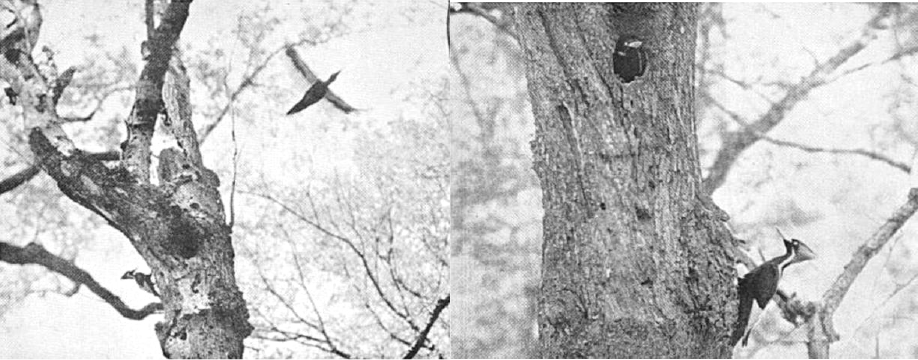
The story of the Ivory-billed Woodpeckers from Saturday's post is a classic example. Their last known-for-sure habitat was in the so-called Singer Tract of old-growth forest in Louisiana. Even before it was being logged by the Chicago Mill and Lumber Company, conservationists were trying to preserve it. However, the business interests of the time fought these efforts, going to the extent of actually logging it faster than normal, until the final bit was cleared--and the last known-for-sure Ivorybill had disappeared.
As in the photo above, we often think of habitat encroachment as horrifying raw gashes in virgin rainforest, and it's a major issue there, for sure. Rainforest destruction is actually increasing--even though we know the rainforests are our best defense against climate change and a host of other ills.
But habitat encroachment is a problem literally everywhere that humans exist. No matter where you live, a few centuries ago it either was virgin land with no humans on it, or supporting a much smaller human population than it is today. We (and our invasive companion animal species) have done untold damage to our own local environments.
Do you ever have raccoons in your garbage (or, more dangerous, bears)? Are you troubled by the fear of foxes or coyotes snatching your pet from your back yard? Before you get all indignant about pesky varmints, it's well to remember that they were here first. Historically, the human answer to such issues was to kill, or at least remove, the wildlife.
But eventually there's no place left to go. Sooner or later, we either co-exist and take intelligent precautions--or the animals will go the way of too many lost species before them. Whether it's elephants on the roads of Sri Lanka or coyotes in suburban US back yards, it's getting to the point where the humans just can't have it all their own way. Humans now live alongside mountain lions in Los Angeles; across the Pacific, humans live alongside tigers in places like the Sundarbans of India.
In the recent Nature miniseries Animals with Cameras, one of the episodes featured sheepdogs ranging the hills of southern France among a flock of sheep--and very effectively deterring the predations of a pack of gray wolves that had recently returned to an area where they previously had been eliminated. Here and there, people are learning it's possible--even valuable--to learn to coexist.
Interactions between wildlife and humans will only become more frequent in the future, as climate change further disrupts habitat and changes patterns, to add to the increasing interactions due to urban sprawl and human population growth. A new way of looking at the situation is beginning to emerge--but all too many humans still react with fear, misunderstanding, and deadly force when confronted with unexpected wildlife "invading" spaces that until recently belonged to them.
But these are baby-steps, in the grand scheme of things. It will take a lot more public education before we routinely see developers and civic planners thinking in terms of preserving and planning for wildlife corridors, highways consciously built to minimize roadkill, and many other strategies designed to help wildlife species continue to exist, despite the omnipresence of humans.
IMAGES: Many thanks to Munchee Daily's article on World Wildlife Day 2016, for the "Wiping out Rainforests" photo; to the African Wildlife Foundation, for the photo of the devastated African rainforest; to Bear-Smart Durango (Colorado) for the photo of the bear cub and the trash; and to John D. C. Linnell and Science Daily for the photo of the french sheepdog with its flock.
One of the ways that humans increasingly intersect with nature is through habitat encroachment. It's a common theme: humans move into an area, change it to suit themselves, and push other species out.
 |
| I've been unable to find the origin of this photo, or which rainforest it is (my guess is the Amazon). But it's a pretty stark example. |
The story of the Ivory-billed Woodpeckers from Saturday's post is a classic example. Their last known-for-sure habitat was in the so-called Singer Tract of old-growth forest in Louisiana. Even before it was being logged by the Chicago Mill and Lumber Company, conservationists were trying to preserve it. However, the business interests of the time fought these efforts, going to the extent of actually logging it faster than normal, until the final bit was cleared--and the last known-for-sure Ivorybill had disappeared.
As in the photo above, we often think of habitat encroachment as horrifying raw gashes in virgin rainforest, and it's a major issue there, for sure. Rainforest destruction is actually increasing--even though we know the rainforests are our best defense against climate change and a host of other ills.
 |
| Different continent, same habitat-devastation problem. This photo was taken in Africa. |
But habitat encroachment is a problem literally everywhere that humans exist. No matter where you live, a few centuries ago it either was virgin land with no humans on it, or supporting a much smaller human population than it is today. We (and our invasive companion animal species) have done untold damage to our own local environments.
Do you ever have raccoons in your garbage (or, more dangerous, bears)? Are you troubled by the fear of foxes or coyotes snatching your pet from your back yard? Before you get all indignant about pesky varmints, it's well to remember that they were here first. Historically, the human answer to such issues was to kill, or at least remove, the wildlife.
 |
| Bears eating unsecured trash may seem like a nuisance, but the situation is dangerous for both the humans and the bears. |
But eventually there's no place left to go. Sooner or later, we either co-exist and take intelligent precautions--or the animals will go the way of too many lost species before them. Whether it's elephants on the roads of Sri Lanka or coyotes in suburban US back yards, it's getting to the point where the humans just can't have it all their own way. Humans now live alongside mountain lions in Los Angeles; across the Pacific, humans live alongside tigers in places like the Sundarbans of India.
In the recent Nature miniseries Animals with Cameras, one of the episodes featured sheepdogs ranging the hills of southern France among a flock of sheep--and very effectively deterring the predations of a pack of gray wolves that had recently returned to an area where they previously had been eliminated. Here and there, people are learning it's possible--even valuable--to learn to coexist.
 |
| Some traditions are really effective: sheepdog with a flock of sheep in southern France. The dog is one of several related local types used to protect the sheep from wolves; this kind of sheep-protection is the origin of the Great Pyrenees breed. (Photo by John Linnell). |
Interactions between wildlife and humans will only become more frequent in the future, as climate change further disrupts habitat and changes patterns, to add to the increasing interactions due to urban sprawl and human population growth. A new way of looking at the situation is beginning to emerge--but all too many humans still react with fear, misunderstanding, and deadly force when confronted with unexpected wildlife "invading" spaces that until recently belonged to them.
But these are baby-steps, in the grand scheme of things. It will take a lot more public education before we routinely see developers and civic planners thinking in terms of preserving and planning for wildlife corridors, highways consciously built to minimize roadkill, and many other strategies designed to help wildlife species continue to exist, despite the omnipresence of humans.
IMAGES: Many thanks to Munchee Daily's article on World Wildlife Day 2016, for the "Wiping out Rainforests" photo; to the African Wildlife Foundation, for the photo of the devastated African rainforest; to Bear-Smart Durango (Colorado) for the photo of the bear cub and the trash; and to John D. C. Linnell and Science Daily for the photo of the french sheepdog with its flock.