Tuesday, October 23, 2012

A Change to "Comments"


I recently discovered that I have been making it harder to post comments to this blog than I had intended, because I was using Blogger's default settings. I have now changed the settings.

Many thanks to Lynette Burrows, who heightened my consciousness about this! Her blog Of Martians and Marshmallows is well worth following,  if you are interested in science fiction, writing topics, or thinking about things in general!

IMAGE CREDIT: Many thanks to the Shapeshed blog, for the "Post a Comment" image!

Thursday, October 11, 2012

If it's Visual, is it Automatically Stupid?

Note: this is a re-post from Artdog Observations:
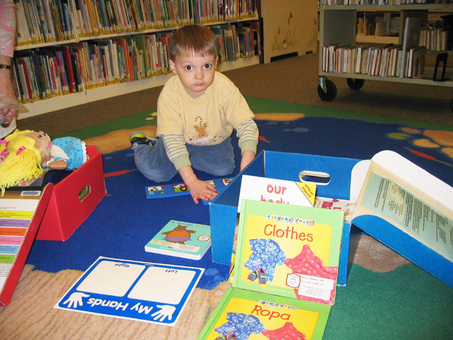
I recently saw an item in Education Week about an effort by the group Reading is Fundamental to incorporate the arts into the teaching of the STEM disciplines--that is, Science, Technology, Engineering and Math.

Early childhood literacy is vital--but what happens later?
I let my imagination play with that idea for a while, and quickly thought of many ways we could have developed arts-based explorations of these disciplines for high schoolers in any of the places where I have taught.

The things I was thinking about would not have "diluted" the teaching--indeed, some of them would possibly have invited greater depth of thinking than some of the assignments I knew were actually being given in STEM classes at that time.

I was a bit disappointed, therefore, when I realized the RIF arts-integration program is targeted only for early-childhood literacy in the STEM disciplines.

It's not that I have anything against early-childhood literacy! I am a strong supporter of the 2000 Book Movement, which promotes the reading of at least 2000 books to all children before they are 6 years old.* Early childhood literacy is vitally important, and worth a great deal more investment and interest than we currently give it in the US.

But I balk at the idea that preschool is the only place where an arts-based approach is a valid gateway to learning. Simple picture books and preschool jingles can have quite grown-up analogs, though we too-rarely see them. The potential for richly-engaging Arts/STEM experiences for students (and their teachers) is truly vast at all levels. If managed well, such an effort could be a major game-changer for many people of all ages.

This is how many students feel about STEM.
Why? Because the deep psychological need that the arts fulfill for human beings is to provide access to new or difficult ideas. The arts give us an instinctual "vocabulary" or "set of tools" for thinking about confusing or unknown things. That's the deep-level reason why we do them at all: because the arts are an essential survival tool.

When the world confronts human beings with things we don't understand, what do we do? We hypothesize about them by telling ourselves a story about them, or creating a visualization, or singing or dancing how we feel about them, as seems appropriate.

How does that translate to the question of how we teach the STEM disciplines? Well, we seem to have trouble getting students to feel attracted to them, for one thing!

Generally, STEM materials look pretty dry. It's a consistent turn-off that
is totally unnecessary, in my opinion. We have ample ways to improve,
the teaching of Science Technology, Engineering and Math, using the arts.
Why do students resist the STEM disciplines, even when they are "required"? The reasons I hear most often tend to be that "they're hard," or "I don't understand them," or "they're boring!" (that last is often said with rolled eyes and a bit of a whine).

How better, then, to make them more accessible--even to those whose "primary intelligence" is not the "math/logical" one normally associated with those disciplines--than by using the tools that humans have developed over the ages as a survival necessity, precisely to help us successfully "fathom the unfathomable"?

How better to interface with the STEM disciplines, on ALL levels, than through the arts? Yet I can already hear critics attacking the idea for higher grades and college, for fear it will "lack rigor."

I long ago came to the conclusion that what most laypersons mean by "academic rigor" has little to do with in-depth critical thinking, and a great deal to do with memorizing longer lists of facts, dates, and equations, but it really seems to me that there is a prejudice in our culture, to the effect that if it's visual, then somehow it's been "dumbed down."

Roots of Human Behavior has unexpected depth--but
also "sells itself short," I fear.
A better realization of the depth that is possible with a visual-along-with-verbal approach came to me recently when I read/viewed a book titled Roots of Human Behavior by Viktor Reinhardt.

Published by the Animal Welfare Institute and clearly aimed at a popular audience, Reinhardt presents some basic--and not-so-basic--ideas about human and animal behavioral parallels, gleaned from his years of research, and he does it in a series of fascinating photos.

Unfortunately, the editorial staff for AWI seems to have bought into the idea of visual-as-dumbed-down, because Roots of Human Behavior sometimes reads like those sappy feel-good emails people send that end "if you care about someone pass this on to them" (you know the ones: they tend to have sparkly angels and animated GIFs).

However, the images themselves in this book are a great example of pictures conveying far more than could be explained with a great many un-illustrated words. I came to the end of the book with a weird feeling of having read something much deeper than it seemed to be--yet not as complete as it should have been.

I'd like to see a textbook on this subject, illustrated with exactly the same images. I bet even high school kids would be willing to put up with what they might otherwise have considered "boring" equations, tables, and technical definitions, if the textbook was illustrated with such a profusion of telling images.

As more educational materials go digital and interactive, I think we inevitably will see more and more visual and auditory approaches to material, in an effort to make them more interesting and accessible. We must guard against the tendency to "dumb down" the visuals, however. Let's use the arts (all of the arts) to help us get to the deepest thinking and the most profound understandings. After all, that's what they're designed to do!

_______________
*Note: Read more about the vital importance of early childhood literacy, especially as it applies to the African-American community, in the informative book, African Americans and Standardized Tests: The Real Reason for Low Test Scores, by Dr. Veda Jairrels.

IMAGE CREDITS: The image of the little boy with the early childhood literacy materials on the floor around him is courtesy of the award-winning Bernardsville (NJ) Library! Belated congrats, guys! (the award came in 2009).  The "math is hard" cartoon is from the Bilerico Project blog: an image worth 1,000 words, and aren't you glad I saved you reading them all? The collection of "dry stuff"--books, pages of equations, chemical formulas, etc., is composed of images from several sources. See the links in the previous sentence! Many, many thanks to all! I looked and looked online for a cover shot for Roots of Human Behavior, but eventually had to scan it for myself.    

Thursday, September 27, 2012

School Funding Myth #1: Money doesn't buy a good education

Recently, I wrote about the ways in which basing school funding on property values in the United States makes it near-certain that schools will be funded inequitably. Placing decision-making about school funding in the hands of a patchwork of state and local governments simply increases that certainty.

At this point in the discussion, people often will bring up some predictable objections to any implication that the funding of US schools might be inadequate or ill-advised.

The first one I normally encounter is the one that says, Money doesn’tnecessarily buy a good education.

This is undoubtedly true in some cases—and unfortunately one need look no farther than the Kansas City, MO School District for a glaring, recent example of this precept. In the latter part of the 20th century, the KCMO district went through aprotracted desegregation lawsuit. At the end of this case, it reaped a windfallsettlement of massive proportions, which it proceeded to waste in spectacular fashion.


Kansas City's East High School had to close early several
times in August, because it has no air conditioning.
With all its newfound wealth, it decided to replace several of its aging, dilapidated schools with new, modern, state-of-the-art buildings. However, very little of this money seemed to go for anything else. Not teacher salaries. Not curricular materials of any substance. And not even all buildings were treated equally. Just last month, two schools in the district had to close early on hot days, because they still aren’t air-conditioned!

No, money and wisdom do not necessarily go hand-in-hand! That said, however, it isextremely difficult to offer a first-class education when you only havesecond-or third-class funding. 

Here are some examples of why this is so:

At some point, even the best teacher
can be overwhelmed by class size.
Class size: There are people who will hotly argue over how much of a difference class size makes, claiming a good teacher is much more important than class size for student outcomes. I certainly will agree that if you have to focus on only one of those, teacher quality is the one to choose. 

But I guarantee you'll get better teaching from any teacher alive, if s/he is not trying to give individualized attention to 40 or 50 students all at once--especially when some of those students don't want to be there or pay attention! 

Technology costs are a burden for nearly any public school.
Technology: Staying current with technology is challenging enough for many businesses, but it is a perennial headache for schools--most especially for schools in poorer districts! I have written elsewhere about the antiquated computers at one of the urban schools where I have taught--but that school was typical. 

A frequent complaint of the business community is that schools are not adequately preparing students with the skills they need to succeed in the business world. Certainly basic math, science, and writing skills are important aspects of that gap--but knowledge of computer skills also is essential. 
The "digital divide" is a direct result of access to resources.

The "digital divide" between richer and poorer schools is often painfully obvious. However, in my experience even some of the more well-to-do public school districts may find keeping up with technology's costs to be a continual challenge when the state funding is cut year after year.

Other Curriculum Materials and Equipment: Technology isn't the only thing that costs money. Traditional, paper-based books keep going up in price--especially textbooks. So are many other types of necessary school equipment. For example, have you ever priced library-quality equipment of any kind? 

One of the traditional complaints of the old, pre-Brown v. Board of Education segregated schools was that the black kids got old, torn-up school books after the white kids were done with them. We like to think we are better off now (though in too many cases we've made way less progress than we want to believe). But then as now, the price tag for high-quality educational materials is more than some schools can afford. 


Field trips can open kids' eyes to the world in unique
and powerful ways--IF their school can afford it.
Field Trips: Transportation and other expenses, such as hiring substitutes for the teachers on the trip (when not all of their students may be able to go) make school field trips an expensive proposition. Some schools simply don't have them anymore. Others have dramatically cut back on them.

Museums, zoos, and similar institutions have had to shoulder an increasing share of the costs involved, but both they and schools have felt the pinch of restricted funding, especially since the beginning of the recession. 

The "informal learning" offered by field trips, even though it is shown by many studies to be powerful and inspiring, is less and less available where funds are restricted.

Two other areas, building maintenance and teacher compensation, also come with hefty price tags. All too often, this means buildings in poorer districts go unrepaired indefinitely, and teachers are not paid adequately. These are topics worthy of much more space than I have left for this post--but I hope I have made my point.

More money may not always "buy" good education, but it certainly increases the odds that it can happen! And there are minimum levels below which we slash educational budgets at our peril.

PHOTO CREDITS: The school funding graphic is from the website Krug for WisconsinKMBC-TV provided the image of the overheated East High School in Kansas City, MO. The cartoon on class size is from  Choccy's Blog on Libcom.org. The Cult of Mac blog provided the iPad-with-dollar-signs image. The "digital divide" image is courtesy of the Bridging the Digital Divide with Online Education blog. And the field trip photo is from the City of Gresham, OR website. MANY THANKS to all of them!

Wednesday, September 12, 2012

Philosophical Differences

Why do so many students dislike school?

Many people have ideas about this. Some are noted experts who write books on the subject. It isn’t often that I read two books within just a few weeks of each other, whose authors are so far apart from each other in opinions and approaches. But recently I did.

The books are Why Don’t Students Like School? By Daniel T. Willlingham, and Unschooling Rules, by Clark Aldrich.  

Viewpoint #1: Willingham
Mastering subject matter is hard, and it
takes a long time.
Daniel Willingham is a noted researcher in cognitive science, and a professor of psychology at the University of Virgina. 

His underlying conclusion seems to be, essentially, that students don’t like school because mastery of subject matter is hard, and it takes a long time. The idea here is that if it isn't fairly quick and easy, they prefer not to stick to the effort.

He strongly argues that learning facts—presumably via the traditional, you-will-be-tested-on-these-facts approach—is essential to mastery, and that mastery of a discipline is the whole point of education. 

He is not greatly enchanted with the school of thought that talks about teaching “thinking skills,” because as he points out, you cannot develop such skills without first learning facts.

Viewpoint #2: Aldrich
Kids are pre-programmed to learn. 
Schools don't nurture that innate curiosity too well.
Clark Aldrich is a noted education-reform expert, described in his author biography as a “global education thought leader.” He is a respected speaker, facilitator, and writer who works with business groups, government agencies, and academic organizations. 

His underlying conclusion seems to be, essentially, that students come hard-wired with a deep and abiding curiosity about the world, and that the job of the educator is to channel that drive to learn, in order to harness its power—not only for mastery, but for a person’s better life. Students don't like schools when the schools do not engage their drive to learn.

He contends that “there are three different types of learning: learning to be, learning to do, and learning to know,” and identifies the third as the kind of learning that is concerned with facts. Moreover, “Traditional schools’ forte, learning to know, can come only after learning to be and learning to do have successfully begun” (pp. 7-8). That is, they start with the wrong kind of learning.

What are we saying to kids?
"Buckle Down!" vs. "Explore!"
For me, these two books crystallize two different education approaches that have grown out of our expanding understanding of how the human brain works. 

Although he writes about the brain in an interesting and authoritative way, Willingham seems to represent the group that retains faith in traditional forms of schooling--what I've called the "paradigm of control" in earlier posts. They see unmotivated kids in their classes as basically lazy. 

Aldrich advocates for an alternative way of "doing school," which is more individual in its approach than traditional school as we currently know it. He and others who think like him see unmotivated kids as people who have not been able to connect with their innate drive to learn.

I am a longtime teacher and practitioner of the arts. For me, the idea of long hours of hard work undertaken for no other reward than mastering a skill--and finding joy in that--is really not strange. 

This is because I know that hard work doesn't have to be the same thing as boring drudgery. 

Okay, practicing arpeggios or learning to hit the basket every time (even if it requires thousands of missed baskets) may sometimes seem like drudgery.  But for a person who is passionately interested in music or basketball, the arpeggios and the practice-baskets are not the point

One practices them for the same reason someone fascinated with chemistry memorizes the periodic table, or someone enchanted with the precision of numbers learns to figure algorithms. 

It isn't so we can pass a test on them. (Not EVER). It's because we need that ability, knowledge or skill to explore our chosen interest more fluently. 

For my money, this is the kind of education every child and adult needs to experience, and which very few schools manage to deliver reliably. Whether it is flute-playing, basketball, higher math, or almost anything, when our interest and drive to learn is engaged, we learn all we can about it, and eventually achieve mastery, because we are fascinated.

PHOTO CREDITS: Cover art for the two books comes from the Rainy Day Books website. The image of three girls playing flutes came from the website of Grosvenor School, an independent day school in South Nottingham. The photo of little Kai practicing baskets is from the blog, "The Adventures of Stinky Mouse and Go Jee." Many thanks to all!

Tuesday, August 28, 2012

Who Should Control School Funding?


Throughout the United States, a battle has been raging over school funding and reform for decades—but the Great Recession has opened a new dimension in the struggle.

Cash-strapped states have been slashing school funding year after year, continuing an effort begun by “small government” forces, now joined by “deficit hawks.” Recently, every new legislative session brings another epic battle, in which it seems the best a district can hope for is not to lose as much ground as last year.

Blue Valley West High School is in an affluent suburb of
Johnson County, KS, where school patrons are willing to tax
themselves sacrificially if necessary, to fund their schools.
All the same, some localities—such as Johnson County, KS, where I live—have resisted this trend as fiercely as they can. Johnson Countians have a long history of repeatedly raising their own taxes—even during the current economic situation—to strengthen funding for our schools. We’re lucky we can afford to do this, because not all districts are able.

We understandably resent and resist any effort to hold us back from more fully funding our schools—yet this is exactly how funding disparities widen between “have” and “have not” schools. When public schools were being set up in the 19th century, the norms of the day and primitive communications led to the natural outcome that schools were funded by local property taxes, and governed locally. And it has stayed that way.

Unfortunately, we now have such an inequitable system that it probably should be ruled unconstitutional. 

Yet Heaven help anyone today who dares to suggest that US school funding should not be sourced and controlled locally! That is especially true in a relatively affluent area where parents clearly understand the value of a good education, but don’t necessarily trust centralized government to make good school decisions!

Educational innovations such as those practiced at this
school for 7-to-16-year-olds in Espoo, Finland, are proving
difficult to "transfer" to the United States.
This presents a real conundrum for reformers, because pretty much all of the countries with students scoring better than ours seem to be run on centralized systems. 

In top-rated Finland, for example, a central government agency controls the schools, mandates a centralized curriculum and educational approach; funds all schools, regardless of neighborhood, at relatively generous and equitable levels; and pays (not to mention respects) teachers more highly than in the US. How do we apply successful methods from the rest of the world, without changing this "central" aspect?

Indeed, for jealously protective parents who don’t want “outside bureaucrats” meddling with their kids’ schools, the reaction has often been the exact opposite of greater centralization. 

Instead, the cry of “school choice!” has gone up in various districts. This has led to an explosion in the number of homeschoolers, charter schools, and an assortment of voucher systems since the early 1990s. More recently, it also has led to a rise in “virtual” school districts offering courses online.

This water-damaged school in Newark, NJ--with no funds for
repairs--provides a cautionary lesson about too much austerity. 
Some parents who seek greater school choice want to flee crumbling inner city districts, which they—often with justification—see as dangerous places with more focus on crowd control than on nurturing children’s learning. 

Some religiously observant parents fear secular influences may alienate their children from their faith. 

Others resist integration, or disagree with curriculum mandates, or dislike placing their children in a “class-based” system that demands all children must learn the same things, at the same ages, and on the same timetable, no matter what their gifting or challenges may be.

Not all motivations are equally high-minded, but nearly all of those listed above spring from parental concern over what, how, and under what conditions their children are being taught. Parental concerns and a deep American respect for individuality are part of the forces that keep the "centralizers" at bay.

They are not the only interests that must be considered in reform efforts, however. 

Also influential in decisions made at all levels are the business interests of large companies in what has come to be called the "education-industrial complex" (test publishers and scorers, textbook and educational materials publishers, for-profit school management corporations, and many others have increasingly profited from contracts to provide school products and services).

Add to them the extremely well-funded ideologues who have begun to play such a massive role in US politics, and the politicians who depend on them for never-ending campaign financing needs. 

There also are numerous philanthropic foundations, academics, writers, think-tanks, teachers' unions, teacher-education institutions, and other voices. 

All have points to make, concerns to protect, and all too often axes to grind, because the one who controls the funding gets to have the final say—and in the clearly-failing US schools, a perilous future for all of us is riding in the balance.

PHOTO CREDITS: I took the photo of Blue Valley South High School in southern Johnson County, KS, in February 2007. It is © 2007 by Jan S. Gephardt, and may be used with attribution, but no alterations. The second photo shows a school in Espoo, Finland; 2012 photo by Tuomas Uusheimofor the book, Finnish Lessons: What Can the World Learn from Educational Change in Finland? By Pasi Sahlberg. The 2011 photo of the New Jersey school is by Tony Kurdzuk of the New Jersey Star-Ledger.

Tuesday, July 10, 2012

Classrooms of the Future


What will the “classroom of the future” look like?

Anyone who is interested in educational reform probably comes around to that question sooner or later, and there are many different visions.

Cartoonist Signe Wilkinson, of the Philadelphia Daily News, gives us a
look at one possible result of ever-increasing cuts to school budgets.
Our technology, our understanding of child development, and our mandated necessity to teach all children in public schools suggest some directions, including making classrooms more accessible to differently-abled children. Growing pressure from tax-cutting state legislatures to reduce costs suggest other potential courses of action.

This West London classroom structure was designed by
Ludic Productions to facilitate a self-directed learning
experience, using new technology.
Some districts have focused on increasing class sizes or reducing course offerings and teacher employment. In recent years, districts in my area have cut hundreds of teaching jobsMore and more districts also are offering online distance-learning options. By 2009, more than half the districts in the US had adopted at least some online courses.

In addition to reducing some costs, "it provides the ability to offer coursework that is otherwise unavailable at a child's school,” noted Anthony G. Picciano, co-author of a 2009 survey of chief administrators (the most recent data I could find). He added, “We find [this] to be especially significant in rural counties."

Tennessee student Kelsey Stephenson takes
an online course at home. Photo by Shawn
Poynter for Digital Directions.
By 2011, several districts and states had begun to require at least some online classes, as a preparation for the future. “The reality is, [at some point] they’re going to have to do an online course,” Kathleen Airhart of the Putnam County (TN) Schools said in an Education Week interview. “This helps prepare the students.”

Of course, not all courses lend themselves equally well to online teaching. As a studio art teacher, I question whether anyone will ever be able to teach an entire studio art course as effectively online as in person with actual materials and immediate feedback.

Salman Khan started a YouTube
online teaching phenomenon--but he's
wise enough NOT to teach some subjects.
The justly celebrated Khan Academy offers more than 3,200 teaching videos on a variety of topics—they even have an impressive range of art history offerings—but not hands-on classes such as ceramics or painting. I’ve seen lots of videos on these topics, true—but none could take the place of an actual teacher in a well-equipped classroom.

Wii Sports Baseball seems unlikely to replace the real thing
anytime soon.
Videos teaching athletic skills are subject to similar limitations. Although technology similar to the Wii gaming system may be developing that will bridge some of those gaps in the future, that time has not yet come as I write this.

If schools only existed to teach subject matter, it is possible that brick-and-mortar schools where students physically gather each day for a set period of time might soon be a thing of the past. But schools as we know them do not only serve as a source for academic learning.

When a massive tornado destroyed Joplin High School,
replacing it became a top community priority.
Schools also are important social and cultural centers for students and their communities. “A place can lose its bank, its tavern, its grocery store, its shoe shop. But when the school closes, you might as well put a fork in it,” writes Timothy Egan in an article about the demise of small towns in the United States. This explains why rebuilding destroyed schools after massive tornadoes in Joplin, MO, Greensburg, KS, and similar places is always hailed asan important community milestone.

Keeping children off the street and engaged in meaningful
learning is a primary role of schools that was unavailable to
these Troy, NY urchins as recently as 1910.
For many families, schools play a vital custodial function for their young children during the day while parents are at work. It is important not to underestimate the importance of this. Historically, public schools in the US were formed in parallel with the juvenile justice system, in response to a growing problem of theft and vandalism by roving bands of urchins as the Industrial Revolution pulled parents into factories, but found children to be unsatisfactory laborers.

Kansas City Missouri's BackSnack program, sponsored by
Harvesters and major donors such as LINC (the Local Invest-
ment Commission) and distributed through schools, provides
a vital service for food-insecure children.
Many poor children also depend on theirschool’s free and reduced breakfast and lunch programs for steady food sources in an otherwise food-insecure existence. The Harvesters “BackSnack” program uses schools as a distribution center for their program to extend food aid during weekends and holidays.

Any “school of the future” would need to meet all of these varied needs, but there might be good ways to do this, outside of a traditional, brick-and-mortar school. I have often wondered if some future schools might be organized into something resembling next-generation one-room schools.

Some employers already provide day care, such as in
this Boston-area store. Could a school room be part of
some future places of employment?
Children could gather in smaller groups, perhaps in community rooms of apartment buildings or in parents’ workplaces (in a similar facility to some employers’ current day-care centers). One or two teachers could supervise and complement or augment online lessons for children who might vary in age, but all attend the same location because it is in their “neighborhood.”

This is a volunteer mentor, but teacher-facilitators in
educational centers could offer similarly individualized
attention.
These teachers could mentor students through several years of schooling, providing both continuity and individualized guidance, appropriate to each student’s personality and abilities. They also could organize outings for special classes such as hands-on science labs, studio art, music classes, exercise classes, sports team practices, or trips to museums. 

This idea does not address the needs for racial and cultural integration experiences, opportunities to associate with age-peers, etc. It would work better in cities than in rural areas, but it also might answer a more complete range of needs than individual online learning in homebound isolation, while still reducing a district’s busing and building-maintenance costs.

No one can be sure what the future will bring, but I definitely think that schools are going to change.


PHOTO AND IMAGE CREDITS: The 2011 Signe Wilkinson (Philadelphia Daily News) “Classrooms of the Future” cartoon is from the NewsAdvance website. The photo of the futuristic-looking London classroom is from Ludic Productions. The photo of Kelsey Stephenson at work in her home was taken by Shawn Poynter for Digital Directions, an Education Week publication. The photo of Salman Khan is courtesy of the Socialtimes blog. The Wii Sports Baseball screen grab is from the Wii Secrets website. GIS at Bucknell provided the image of the tornado-devastated Joplin High School. The photo of the urchins in Troy, NY is courtesy of the "Sweet Juniper!" archive. The KC LINC website provided the "BackSnack Program" image. The employer-provided day care image is courtesy of the Boston Globe, and the photo of the mentor with her school-age friend is from the Raleigh, NC Neighbor-2-Neighbor organization's "outreach" webpage. Many thanks to all of them!


Saturday, June 30, 2012

Read what I've been writing lately!

It has been a while since I've had a chance to post here, and I apologize. I am working on developing an every-other-week posting schedule, to begin in July. I am working on several stories now.


Meanwhile, I thought you might enjoy reading some of my work that recently has been published on the Teaching Tolerance Blog.


Here's a link to my Author Page, which gives an overview of all my work that they've published.