Wednesday, December 1, 2021

Beating Supply Chain Issues

By Jan S. Gephardt

We’ve been hearing a lot about supply chain issues, and the resulting problem of inflation (due to the market forces of high demand and lower supplies—no, it’s not the infrastructure bill). Deals aren’t as good, this year, we hear. Shop early, and don’t wait for deals, we’re told. Supply chain issues are messing things up, and there could be worse to come!

Be scared! Be angry! These messages come through loud and clear. The economy is going to hell, and we’re all gonna die. Or so some would have you think (mostly so you’ll give them money).

I don’t believe it has to be that bad. And you don’t have to receive that word, either. We can beat supply chain issues and have a lovely Christmas/Holiday season, if we keep our priorities straight. In this post I plan to focus on smaller-scale, creative and adaptive things we can do to beat supply chain issues in sustainable ways.


Four images of backed-up shipping lanes off the coast of California.
Back in February 2021, the Coast Guard documented a growing backup of cargo ships outside California ports (Freight Waves/US Coast Guard).


We Can’t Whip Inflation and Supply Chain Issues with a Closed Mind

If you have a fixed idea of What Christmas Has To Be, and it’s built around the newest, coolest, hottest toys, electronics, and fashions, I can’t help you. Is hitting the Black Friday, Cyber Monday (or, for that matter, the After Christmas) sales your idea of a good time? Do you seek out the very most rock-bottom prices for trendy items that are on “everyone’s” must-have list? Well, then, for you I've got nothin’.

If you (or the people on your gift list) will only be satisfied with those hot new, influencer-endorsed, “must-have” things, this post is not for you. You live in a different reality from where I’m centered.

But if you’re willing to open your mind and be flexible, to focus on the fun, the personalized, and the unique, then read on.


Shoppers in a crowded store and a massive Amazon fulfillment facility.
A lot of people will be fighting through crowds or fueling a massive wave of shipped packages this year in an effort to get ahead of supply chain issues (iStock/Sculpies; Amazon).


“Buy Local” is a Survival Tactic—For Us and Our Communities!

You’ve heard the mantra “buy local” a gazillion times by now, and there are good reasons why—even if the local shops are a bit more expensive. Local shops (even local franchisees, although they often aren’t able to be as flexible) are invested in the community. Larger concerns are not, and they actually can’t be.

I’m old enough to have seen some “big box”-type stores rise and fall. Remember K-Mart?They still exist!—but not around Kansas City. Do you remember Borders Books? They were fun while they lasted. But when things went sour and the business model changed, they cut their losses and closed local outlets.

Never mind if they’d run local stores out of business and now they were the only sources. I’ve lived in rural communities where that was literally the case. But their corporate offices didn’t care.

That was then. Now it’s the online stores that grab ever-greater percentages of buyers. Maybe you don’t worry about the possibility that you’re perpetuating inhumane workplaces. Maybe you can ignore underpaid, stressed-out warehouse or factory workers, who have to meet ever-higher quotas at an ever-faster pace.

Shipping from overseas adds a significant carbon load to the environment. Shipping from online outlets can drive up the price of your bargain. And ultimately, everybody’s fuel prices, too. What’s the carbon footprint, even if it’s “free” shipping?


A different view of a very busy Amazon fulfillment facility, and a Foxconn factory with suicide nets.
At left, Prime Day 2021 at an Amazon warehouse in North Carolina. At right, do you remember the Foxconn suicide nets from 2010? It’s clear that extreme pressure in factories and fulfillment centers can still be a problem. (NBC News / Rachel Jessen / Bloomberg via Getty Images file; Silicon Valley Toxics Coalition).


Beat Supply Chain Issues by Buying Local and Staying Open-Minded

If you shop from a list of pre-determined items, your track is rigidly set. The only issue becomes “what’s the lowest price?” Maybe you also shop for quality or value-for-the-money. Maybe you shop for “can-I-get-it-by-X date?” But if that’s your strategy, then serendipity is not your friend, and neither are supply chain issues. You may have to wrap a box that contains a picture of the “someday my box will come” item.

I have often made excellent gift-finds by walking into a local store and looking around. I once bought half my Christmas presents at Kieran’s Hardware Store in Lockwood, Missouri (there’s still a hardware store there, but it doesn’t seem to have Kieran’s name on it). One of my students, who clerked there part-time, offered great help. We had a fun and creative experience. Most of those gifts were a major hit with their recipients, too.


A quaint row of small shops in Kansas City, MO.
A block full of small, mostly local shops in the Kansas City Brookside neighborhood (First Washington Realty).

Local Gems

I bet your area has such stores, if you seek them out. Places like Rainy Day Books in Fairway, Kansas They know their stock, they gift-wrap for free, and they’re experienced “book matchmakers.”

Places like the R&R Center in St. Clair, Missouri, which is on its fourth generation of owners from the same family. It is way more varied and essential than just another Ace Hardware Store.

Or places like Brookside Toy and Science in Kansas City, Missouri, a shop I’ve depended on for a couple of decades’ worth of great Angel Tree toy finds. Their knowledgeable staffers are amazing!


Storefronts of Rainy Day Books, R&R Center, and Brookside Toy & Science.
L-R, The proprietors of Rainy Day Books outside their store, R&R Ace Hardware, and Brookside Toy & Science’s storefront. (Rainy Day Books; Google/Laura Montgomery; Google/Brookside Toy & Science).


Beat Supply Chain Issues by “Shopping Local” for Food

If you’ve followed this blog for very long, you know that both my sister and I have strong feelings about supporting local businesses, especially artists. My sister’s posts “Setting the Table” and “A Necessary Indulgence” on The Weird Blog offer glimpses of how she treasures small craftspersons. There were strong elements of this aesthetic in her recent post “A Birthday Indulgence,” too.

But artisanal efforts don’t only happen in the realms of art and fine crafts (we’ll revisit those disciplines later in this post). The most delectable artisan crafts create food.

The season for farmers’ markets may have passed, but that doesn’t by any means show that all the local food-oriented businesses have closed. Very much to the contrary! Just look at “the two Kansas Cities.”

Some KCK Connections

Here in my neck of the woods, we have Bichelmeyer Meats, another longtime-local (70+ years), family-owned shop (pronounce it “BICK-el-my-er”). They’re located across the state line and the Kaw/Kansas River, in Kansas City, Kansas.

This old-style butcher shop supplies locally-reared, grass-fed meat that’s never gone anywhere near a feedlot or a meat-packing plant. They also offer a selection of outstanding house-made sausages and their own, competition-tested barbecue sauce. It’s Kansas City. Of course they have barbecue sauce! They also do their best to be affordable, even for folks on a tight budget. Does your area have such a gem, too?

You might not have exactly the same ethnic mix in your area, so the specialty foods will vary. But I bet you have delicious and unique offerings! Strawberry Hill Baking Co. has operated in Kansas City, Kansas for more than 100 years, and their Povitica (pronounced “po-va-teet-sa”) has become pretty famous. It’s an originally-Slavic treat that all of us can enjoy!


Sausages, the Bichelmeyer’s logo, four kinds of Povitica and the Strawberry Hill logo.
Along with locally-sourced, grass-fed meats, Bichelmeyer offers house-made sausages. And Strawberry Hill Baking Company makes Povitica in a dizzying array of flavors. (Bichelmeyer Meats; Strawberry Hill Baking Co).

But wait! There’s Chocolate!

Kansas City, Missouri has deep roots in chocolate candy-making. We’re the original home of Russell Stover Candies. But if that’s too “mainstream” for you, we have a deep “chocolate culture” here.

Annedore’s Fine Chocolates is within walking distance from my house—yet, alas, nowhere near far enough to walk off the calories! André’s Confiserie Suisse (which shares a building but is technically next door to the local Swiss Consulate) is about an equal distance from my father’s South Plaza condo. And we can’t forget Christopher Elbow, with a shop downtown! Each has their own approach, and each has been judged as world-class.

Yes, the chocolate is strong with Kansas City! What is your home town’s specialty food?


Annedore’s, Christopher Elbow, and André—all Kansas City chocolatiers.
Kansas City’s world-class chocolatiers Annedore’s (top) , Christopher Elbow (center), and André’s present a divine approach-approach-approach conflict! (Annedore’s Fine Chocolates; Christopher Elbow Chocolates; André’s Confiserie Suisse).


Beat Supply Chain Issues by Shopping Local Artisans, Artists and Crafters

If you’re onboard with the philosophy of shopping locally and creatively, you probably already have scoped out local art fairs, festivals, and craft shows. This time of year, they often pop up in malls and convention centers. Earlier in the season, they might have been outdoor street fairs. We recently had such a gathering in our River Market district.

But even if there’s no show this week/weekend, that doesn’t mean there’s no art to be found. Here in the Kansas City area we have any number of wonderful creators with their own studios. Check out Genevieve Flynn (jewelry) or Susan F. Hill Design (fiber art). For paper-based art, consider Angie Pickman’s Rural Pearl Studio (wonderful cut-paper art; technically in Lawrence, KS), and my longtime friend Randal Spangler (fantasy art originals, prints, and more).

If you’re aware of a local artist, they’re probably planning a holiday open house. Ask to be put on their mailing list, so you’ll know when it’s happening!

And don’t forget local artist groups and associations. They’re probably having holiday sales, too. For example, the KC Clay Guild has its 39th Annual Holiday Pottery Sale and Studio Tour this coming weekend. The Weavers Guild of Greater Kansas City already participated in the Creative Hand Show and Sale for this year, but Creative Hand has a great list of artists and their websites. You can bet than most of them would be willing to sell you cool stuff.


Offerings from the holiday shows for “Creative Hand” and the KC Clay Guild.
Holiday sales offer quite a range of interesting objects and wearables. (Creative Hand; KC Clay Guild).


Options for Beating Supply Chain Issues are all Around Us

Thinking outside the commercial run of average stuff may be an adjustment, but it’s worth the effort. We just have to look for local options, and keep an open mind. I hope this overview gets the ideas flowing (I do plan to suggest more ideas in an upcoming post). Our own supply chains will be that much more resilient when we “shop local,” and our communities will be, too.

I’d love it if this post gives my local favorites a boost (Go, Kansas City Metro!). But it’s also true that there are local treasures wherever you live. If you already love local gems in your area and want to give them a shout-out, please mention them in a comment below!

THANKS!

First of all, thank you, just in general, to all the local businesses I’ve highlighted in this post. I’m proud of you for persisting in the face of price-undercutting by “big box” and online competitors, COVID lockdowns, market crashes, inflation, tight job markets, and all the other challenges you’ve faced—sometimes for decades and across generations. You’re part of why I love my hometown.

Second, I deeply appreciate the sources of all the photos and logos used in this post. Please note that all images are credited in the cutlines. All montages, except the 4-photo collection from the US Coast Guard via Freight Waves at the top of this post, were assembled by Jan S. Gephardt.

Wednesday, November 24, 2021

It’s a Puzzle

By G. S. Norwood

The heirloom pumpkins nearly defeated me. They looked so simple, ranked by color across the top of the box. Pretty. Old fashioned. Challenging, but not too challenging. Just the way I like it. And why do I like such challenges? It’s a puzzle.

A literal puzzle, in this case, as well as an interesting question. The pumpkins are the subject of a 1,000-piece jigsaw puzzle I purchased not long ago to feed my puzzling fascination with puzzles.


Many colors of heirloom pumpkins made a challenging puzzle
I thought I’d never finish this one! (photos by G. S. Norwood. Puzzle by Bas Bleu; uncredited photographer).


A Deep Family Tradition

I don’t remember when I first started solving puzzles, but the puzzle bug really bit when I was in high school. The family had started spending every Christmas-to-New-Year’s week with my grandparents. We’d come up from Missouri, my aunt would fly in from San Francisco, and we’d entertain ourselves all week by watching football, eating popcorn, and working a giant jigsaw puzzle. One year the puzzle was a close-up photo of popcorn that kept us busy and hungry for days.

Years later, after Warren died and I moved to a house with room to spread out all those puzzle pieces, I decided to revive the Christmas puzzle tradition. That first year I began modestly, with a simple 300-piece puzzle Deb Crombie gave me in tribute to Gift, the cat. In the years since I have collected many, many more. Most of them are 1000-piece puzzles, and many of those are almost as challenging as that popcorn picture.


The original cat puzzle, plus two others from early in G.’s hobby.
The gateway puzzle that got me back into jigsaws. And a few others I’ve solved. (photos by G. S. Norwood. Puzzles: “Rose” (G.’s “gateway”) puzzle by Lang; art by Lowell Herrero. “Unicorn Reading” by Mudpuppy; art by Steph Terao. “Whimsical Village” by artist Anisa Makhoul from eeBoo).


Chaos and Harmony

One of my main challenges in completing a jigsaw has nothing to do with the puzzle itself, and everything to do with the cat standing on the table amid all those little puzzle pieces. Ella, my beautiful tortie-tabby, is the Queen of Messing with Small Bits of Cardboard. She can bat those suckers under the furniture or into the waiting jaws of a bored dog faster than the eye can follow. Figuring out ways to thwart Ella is a satisfying part of working a jigsaw puzzle.

Gift, my beloved calico, doesn’t really care about messing with my puzzles, but she did save one once. I’d given myself a really beautiful but super-hard 1000-piece puzzle of a marsh owl for Christmas. After many weeks of work I managed to complete it—except for one single missing piece. I knew it had to be on the floor somewhere, probably thanks to Ella.


Two cats, and the puzzle in question.
Ella (L) loves to mess with my puzzles, but Gift (R) once saved the day. (photos by G. S. Norwood. Puzzle by Bas Bleu; art by Angela Harding).


I swept, moved furniture, did everything I could to find that piece. No luck. I left the puzzle on the table for months, hoping the piece would turn up. Then, reluctantly, I broke it down and put it back in the box with a little note that one piece was missing.

About a week later, as I was starting a new puzzle, I heard Gift messing around behind me. She was playing cat soccer with the missing piece, batting it all across the hardwood floor. Thank you, sweetie! I’m glad she found it, but I’m not planning to work that puzzle again any time soon.


For a quilter like G., these puzzles were a natural: a clothesline full of quilts, and the traditional “Lone Star” Pattern.
Here are a few more puzzles I’ve completed. No missing pieces! (Photos by G. S. Norwood. Puzzles from Quiltfolk. The “Lone Star Quilt” puzzle at right is still available; the other appears to have been discontinued).


Puzzling Lessons

Why do I enjoy jigsaw puzzles so much? For one thing, they restore my focus on those days when too many issues are grabbing for my attention all at the same time. For another, they are a purely visual pursuit that gives the verbal part of my brain free rein to start cooking up new stories to tell.


Two puzzles: “Kitchen Chickens,” and “Songbird Tree.”
Helping to sharpen the author’s strategic skills! (photos by G. S. Norwood. Puzzles by Bas Bleu: "Kitchen Chickens" at L, and "Songbird Tree." Neither artist credited).


They can also sharpen my strategic skills. Different puzzles have different anchors from which I can begin the solving process. Are there large areas of one color, like the green stove in Kitchen Chickens, or the brown ground in the Songbird Tree puzzle? I’ll start with those pieces and work my way out.

Although that can backfire. When I sat down to solve the cat puzzle, I decided to start with the cats’ faces, since each of them was different. That meant finding all the pieces that had cats’ eyes on them. Then I had to match the eyes up so I could identify each cat’s face, and figure out where it went in the overall puzzle. The result? Hundreds of cat eyes staring back at me every time I sat down to work.


A puzzle of the painting, “Double Cat Spread,” 1988, by Ditz.
All those eyes! (photo by G. S. Norwood. Puzzle “Double Cat Spread” from Pomegranate; artist is Ditz, of Austria).


Patience, My Friend

Sometimes a hard puzzle can stall out on me. I don’t seem to be making any real progress, and I worry I’ll never get all the pieces into their proper places. That’s when the six-piece rule kicks in. I can usually find one or two pieces when I sit down to work. If I find two, I can often fill in a few more pieces around them. So I have decided that finding six pieces is enough for any single puzzle session. Over the course of a day, I might squeeze in four or five quick sessions. That means I may have 30 new pieces in place by the end of the day.

Eventually those pieces add up, filling in significant areas of the puzzle. And then I’m back on track to solve the whole thing. All it takes is patience and the understanding that six pieces can be plenty.

Of course, I learn other things while I’m working, too. The Metropolitan Museum Map puzzle taught me that I might need reading glasses!


The “Metropolitan Museum Map Puzzle” is large and intricately detailed. Two “detail images” on either side demonstrate its complexity.
You need a working knowledge of art history, and really good eyesight (or reading glasses!) to solve this one. (photo by G. S. Norwood. Puzzle by the Met, full puzzle flanked by detail images; uncredited artist).


It’s a Puzzle

Scientists who study the human brain have begun to look at the effects of solving jigsaw puzzles. They have found that working on a jigsaw puzzle engages both the analytical left side of the brain and the creative right side. Both sides must work together to visualize the puzzle’s pieces and determine where they should go. Such brain activity may help older adults stave off the type of cognitive decline associated with Alzheimer’s disease.

So why aren’t more people out there solving jigsaw puzzles? Well . . . It’s a puzzle!

It’s a Lot More Puzzles (a Gallery)

Editor’s note: G. sent many more photos of wonderful puzzles she has assembled. Here’s a gallery of them. We hope you enjoy them!


A whimsy puzzle, such as “Bookshelf” has pieces shaped as things such as glasses and scissors. “Cat Nap” continues the “books” theme with a cat asleep on a stack of books.
Wentworth “Bookshelf” whimsy wooden puzzle is called a “whimsy” because of the pieces in related shapes. The “Cat Nap” puzzle continues the “book” theme. (Photos by G. S. Norwood. Bookshelf puzzle by Wentworth Wooden Jigsaw Company; art by Colin Thompson. “Cat Nap” puzzle by Eurographics; uncredited artist).


Two puzzles: “Success,” featuring a large sunflower, and “Flower Catalog.”
Puzzles that feature flowers naturally lead to beautiful results. (Photos by G. S. Norwood. The Sunflower design “Success” puzzle by Lang appears to be discontinued/unavailable. “Flower Catalog” puzzle from the Smithsonian Store; historical images).


This large oval puzzle commemorates the 2017 Women’s March.
An appropriately challenging image memorializes the 2017 Women’s March. (Photo by G. S. Norwood. Puzzle by eeBoo; art by Jennifer Orkin Lewis, @AugustWren).


IMAGES

Photos of assembled puzzles by G. S. Norwood. She offers special thanks to “the sources of so many of my puzzles,” Bas Blue, as well as The Smithsonian Store, and The Metropolitan Museum of Art. Photo montages composed by Jan S. Gephardt.

Wednesday, November 17, 2021

A Birthday Indulgence

 By G. S. Norwood

By now you all know that I am a self-indulgent woman. I’ve blogged about how I value little rewards to myself for a job well done, or just for a laugh. But birthdays? Birthdays are an indulgence class all their own. Because I live alone, I can be really extravagant when it comes to a birthday indulgence.

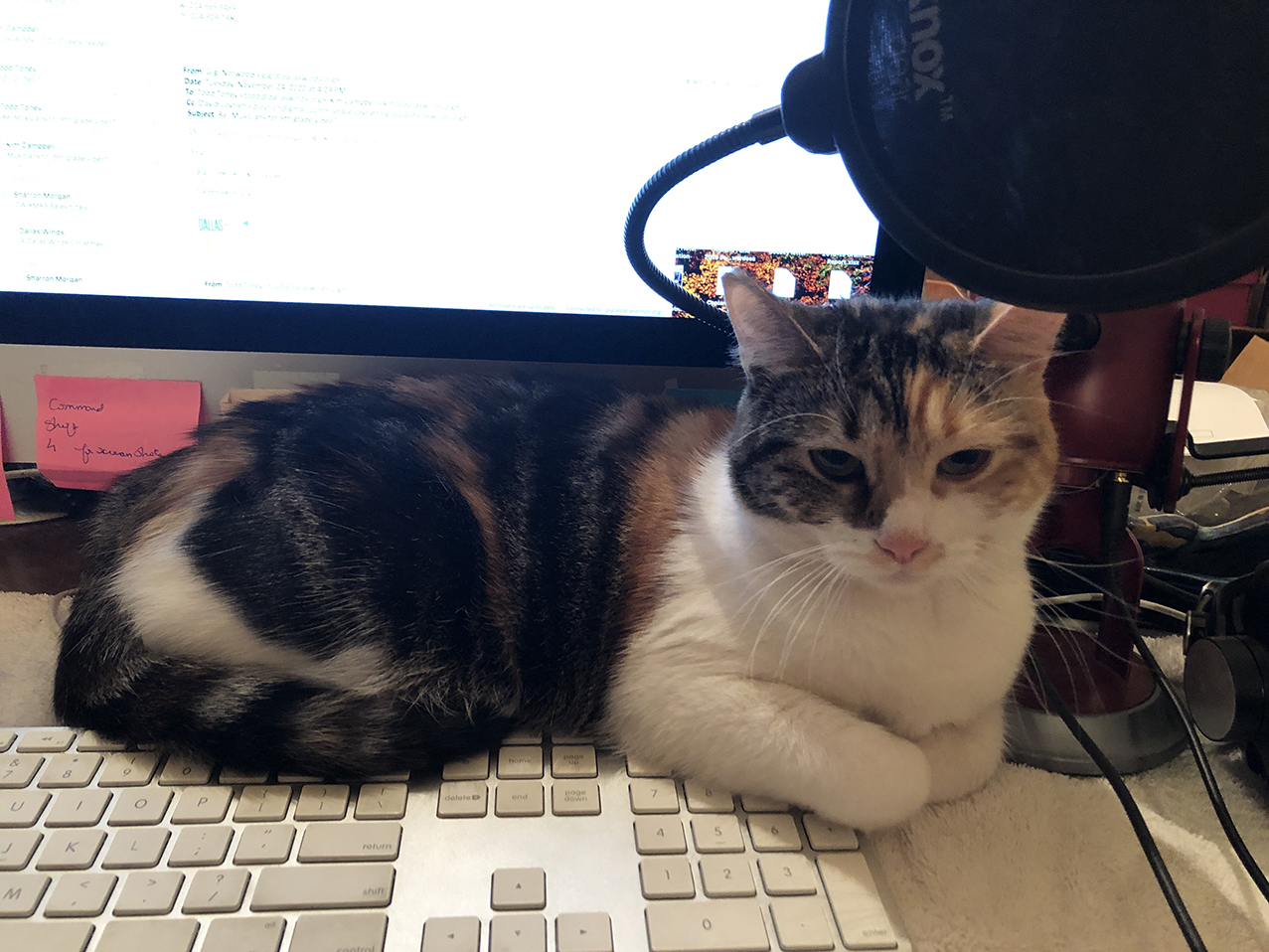
In past years I have given myself pens and paintings. One year I famously gave myself a cat. Or was it Gift who gave herself a person that year? Sometimes it’s hard to tell with that girl.


Keyboard Kitty: In 2019, the Universe gave me a cat for my birthday.
Gift is one of my all-time favorite birthday indulgences. (G. S. Norwood).


Place Markers and Promises

One thing I enjoy is jewelry, particularly lovely rings. I have given myself more than a few for my birthday, including one made by a contemporary Native American artist, and one that looks like traditional Native American work, but was actually made by a friend’s husband.

For me, these rings are place markers. I wear them to remember a specific time I wanted to celebrate by giving myself this precious gift. The contemporary ring marked the birthday that officially made me older than Warren ever got to be. For me, it is a symbol of survival.


Traditional Ring; Contemporary Ring: Two of the many nice bits of jewelry I’ve given myself for my birthday.
The traditional ring on the left. The contemporary ring on the right. (G. S. Norwood).


The Symbol of a Vow

The traditional ring has an even stranger story.

I spotted it in a photo of work my friend’s husband was taking to an art fair. Since I wouldn’t be able to attend that weekend, I figured the ring was as good as gone. Something that lovely would surely sell fast.

When the weekend was over, I asked if he’d sold the ring. He hadn’t. He offered to send it to me on approval. If I liked it, I’d send him a check in return. The ring arrived a few days later, and I liked it even more “in person” than I had in the photo. But the only finger it fit was the ring finger of my left hand, where I no longer wore my wedding band.

I decided, if I was going to wear the ring on that particular finger, it should symbolize a promise I made to myself. Now when I look at the ring, I am reminded of my vow to be strong, to be brave, and to take control of my future instead of drifting along, cowed by all the challenges of life. When I wear it, it is much more than a birthday indulgence. It is the symbol of my vow.


Decorative ceiling beam and wall bricks.
Architectural details in Santa Fe, New Mexico: At a shopping plaza, and the Lensic Theatre. (G. S. Norwood).


Getting Out of Town

Sometimes I give myself an experience for my birthday, rather than a self-indulgent thing. Like the time I gave myself a weekend in Santa Fe, New Mexico. That one started out as a way to keep myself honest.

You see, there was this piccolo audition. I work for the Dallas Winds. From time to time a musician will retire and create an opening in the core Winds ensemble. We fill those openings by holding blind auditions.  They can last all day and be a real beating, even when you’re not the musician behind the curtain with your career on the line. When the Winds decided to hold piccolo auditions, they discussed a variety of dates, one of which was my birthday. I told them I could work any date but that one. I planned to be out of town that weekend, I said.

In my world, “out of town” can simply mean “not in Dallas.” Since I live in a little town about 30 miles north of Dallas, any time I go home I’m technically “out of town.” But this was my birthday. So when the Audition Gods decided my birthday weekend was the best possible time for piccolo auditions, I decided to get out of town for real.


The Santa Fe Plaza and two historic Santa Fe buildings, the hotel and the cathedral.
One birthday I treated myself to Santa Fe, staying in La Fonda, around the corner from St. Francis Cathedral and not far from the Plaza. (G. S. Norwood).

A Trip to Santa Fe

But where could I go that would require minimal travel time and offer an affordable adventure? I chose Santa Fe. The flight was only an hour to Albuquerque. From there I’d have the modest adventure of driving another hour into the mountains to Santa Fe. Oooo! That meant a rental car! I love rental cars. And a hotel? I booked myself into La Fonda, one of the coolest historic hotels I’ve ever stayed in.

I only had a couple of days there, but I loved every minute. I spent my birthday morning touring the art galleries along Canyon Road. In the afternoon I walked the Plaza, and logged some quality time just sitting on my private balcony, watching the crows that lived around the Loretto Chapel.


View of Santa Fe and Loretto Chapel
The Loretto Chapel, as seen from my balcony. (G. S. Norwood).


I connected with a friend I had only known online. We met up the next morning for breakfast and several hours of amazing, wide-ranging conversation. I found an interesting bookstore and a lovely restaurant. I walked all over, then drove even farther, going back to Albuquerque via the back roads to see even more new stuff.

By the time I got home to Dallas, I was replete with new experiences and memories that I cherish to this day. Plus, no involvement in the piccolo auditions, and an unsullied reputation for honesty. Talk about a birthday indulgence!


Views from historic Cerillos, New Mexico.
I took the back road, called the Turquoise Trail, down to Albuquerque. (G. S. Norwood).


A Birthday Indulgence

As my birthday approached this year, I began to think about a new birthday indulgence. I wouldn’t be able to travel. Aside from the ongoing pandemic, I have a trip planned for later that will use up all my dog-sitting resources. I have all the pens and books any sane woman could want, and I haven’t seen any fresh artwork that needs to find a home on my walls. I could invest in a bit more renovation—I need tile in my den, and there’s a closet that could be rebuilt. None of these ideas grabbed me.

The one idea I kept returning to was a gas log for my fireplace. I love a good fire, but I hate hauling wood and shoveling ashes. After last February’s deep freeze, I thought it might be prudent to get something for my house that could give off heat even when the electricity is out for an extended time. I searched online, found a local dealer, and gave him a visit. He had a style I liked, at a price within my budget. And yet . . . Somehow, I kept holding off.


Two nice fountain pens, an Esterbrook Estie and a Stipula Adagio, with Jill Danahey’s painting, “Winter Persimmons.”
The same old indulgences didn’t appeal this birthday. (G. S. Norwood; Winter Persimmons is © by Jill Danahey).


Somebody Needs to be an Adult

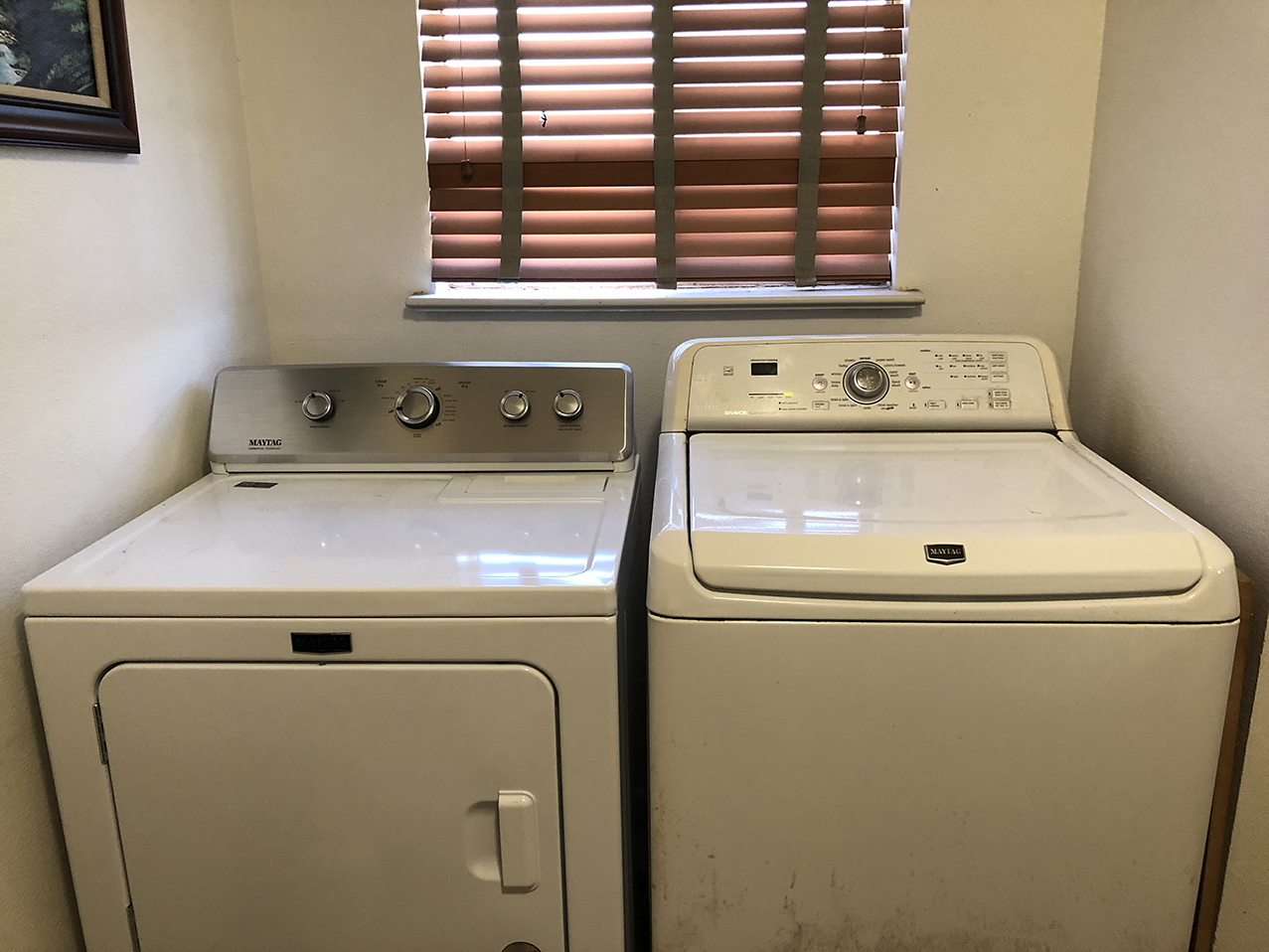
And then, one morning, I opened the door of my clothes dryer to find it had died mid-cycle, and was no longer responding to my commands, pleas, or prayers. While I am old enough to remember clotheslines, I don’t have one in my back yard, and I don’t really fancy going back to the days of lugging heavy baskets of wet sheets outdoors to pin up in the breeze.

I went online and did my research. Turned out the kind of dryer I wanted cost . . . just about exactly the same as that set of gas logs I’d been eyeing. Clearly somebody in my household needed to step up to be an adult. That “somebody” was me, of course, because you can’t count on cats or border collies at moments like this.

So there it is, folks. This year I have chosen to indulge myself in warm, fluffy sheets and towels with that fresh-out-of-the-dryer smell. I have named my new indulgence Emily, for no good reason beyond the fact that it seemed a good match for Arthur, the washing machine. Emily is a champ at getting things dry.

It might not be the kind of decadently indulgent birthday present I usually give myself, but I am satisfied with my choice. Well done! Happy birthday to me!


The author’s new clothes dryer, next to her washing machine.
Emily and Arthur—together at last. Happy Birthday! (G. S. Norwood).


IMAGES:

All photos were taken by G. S. Norwood. Winter Persimmons is © by Jill Danahey. In case you're curious, the fountain pens are an Esterbrook Estie and a Stipula Adagio.

Wednesday, November 10, 2021

Almost Perfect Except . . .

By Brian Katcher

Brian Katcher is a writer whom one of our usual bloggers, Jan S. Gephardt, met at the science fiction convention Archon 44 (He’s also spotlighted in Jan’s Authors of Archon 44 post). He told this story during a panel discussion in which they both participated. She asked him to share it with our audience, because it demonstrates an issue we also face. The Weird Blog and Artdog Adventures support diversity and representation. As a pair of older, middle-class white women Jan and G. at Weird Sisters Publishing understand an author can confront many challenges when they try to promote inclusivity and multicultural representation in their fiction “while white and straight.”

The Almost Perfect Story

Almost Perfect is the story of Logan, a cisgender boy, who recently had a bad breakup with his girlfriend. He then meets Sage, a new girl in his school, he thinks he's met the person who's going to help him move on. When he discovers she's transgender, however, he is forced to rethink their entire relationship. Can they still be friends? Can they be...more? Almost Perfect won the 2011 Stonewall Book Award for Children's Literature.

This book started out as a short story. I was looking to write a boy meets girl story that hadn't been done a thousand times, and I hit upon the idea of writing about a heterosexual boy and a transgender girl. How would a relationship like that work? When I showed a draft to my writers' group, they told me that I couldn't do that in 80 pages. To make it into a novel or not to bother.

Brian Katcher received the 2011 Stonewall Book Award for Children's Literature.
In 2011 Brian accepted the Stonewall Book Award for Children’s Literature, for his book Almost Perfect. (Credits below).


Research and Early Responses

Well, transgenderism wasn't a subject I'd given a lot of thought to, so I turned to the internet for research. I went to forums for transgender people and said that I was writing a book and needed information, both specific and general. Boy, did I get some great responses. And the more I heard, the more I wanted to tell this story. The overwhelming theme I got from older transgender people was the idea of having absolutely no one they could share this with, no one whom they could confine in, and having no idea where to turn or what to do.

I was overwhelmed with the response to the book. The ALA awarded me the Stonewall, I think because I was probably the second YA author to write about a trans character (After Julie Anne Peters's Luna). Fan mail poured in. I heard from countless transgender people who thanked me for finally telling their story, and praising my research.

Covers for the books “Almost Perfect” and “Luna.”
Two of the earliest books about transgender youth written for young adults, both Almost Perfect and Luna broke new literary ground. (credits below).


Delayed Reaction

However, after a year or so, I started to get blowback. Sure, some of it came from transphobes (The Florida Tea Party tried to get it removed from school libraries), but most of it was from the LGBTQ community. Some of it was taking me to task for poor turns of phrase (I said 'transgendered' instead of the preferred 'transgender', or having Sage come out to Logan by saying 'I'm a boy').

Others didn't feel that as a cisgender man, it was my place to tell a story like this. But the most overarching criticism was that the story was depressing. Sage is repeatedly used by Logan, assaulted by another man, and ultimately moves away, still trying to live the life she needs to. Why couldn't she have a happy ending? Why would she fall for a jerk like Logan? Was I trying to say that transgender people are destined to be unhappy and will never find true love?

A snapshot of Brian Katcher near a body of water.
Here’s a more casual photo of Brian. (Brian Katcher).


Brian’s Self-Critique

While I did do my research beforehand, I really should have gotten some sensitivity readers to look at the finished product. There's no excuse for that omission. While I feel I wrote Almost Perfect with the intention of educating people about how difficult it can be to be transgender, I failed in several respects.

Still, I've never once had a reviewer say they didn't like Sage. More than one person told me the book gave them the courage to come out. And there are at least two women who chose 'Sage' as their new middle name. This is my book that gets the most requests for a sequel. Well, it's the only book that gets requests for a sequel.

Covers for Brian Katcher’s books “Playing with Matches,” “Almost Perfect,” “Everyone Dies in the End,” “Deacon Locke Went to Prom,” and “The Improbable theory of Ana & Zak.” Also Brian’s picture.
If you read Jan’s post Authors of Amazon 44, you might remember this profile image. (Amazon; Brian’s website).


Pitfalls and the Creative Process

When you're a boring old white straight guy like me, you get into a kind of Catch-22 situation. You don't want to write yet another book about white, straight people, but is it your place to tell someone else's story? My advice is to get sensitivity readers, both at the front and the back of the creative process. And be sure to thank them afterwards. If you feel good writing about people like yourself, no problem. And if you'd like to expand who you write about, the world needs diverse books.

But above all, be true to your own creative process. Find a character you and your readers can fall in love with. Remember, you’re never going to please everyone. But when those one star reviews come in, make sure they’re because of your hackneyed writing and unoriginal plots, and not because you misrepresented someone’s culture. And if someone has a problems with how you present someone, listen.

Brian and the cover of “Almost Perfect.”
Here are Brian and the cover of his book Almost Perfect. (Credits below).


IMAGES

Many thanks to Brian Katcher for the photo of him accepting his Stonewall Award, the cover image for Almost Perfect, and his author photo. Learn more about Brian at his website. Read his book reviews (and support the review website if you wish), at For Every Young Adult.

Many thanks to Books Bird for the Stonewall Award image, and to Amazon for the Luna cover image.

Wednesday, November 3, 2021

Dealing With Death in Reality and Art

 By Jan S. Gephardt

A whole cluster of holidays happen during what is for the Northern Hemisphere a season of harvest and winter’s onset. The common thread that weaves through them all is dealing with death.

I’ve written about Halloween/Samhain, Día de los Muertos, All Saints Day, and All Souls Day on this blog in the past. Indeed, my “Virtual Ofrenda” is one of my most enduringly popular posts. Through them all, I’ve kept coming back around to similar themes.

Dealing with death is hard. It’s sad. Terrifying. Inevitable for all of us. Death is as much a fact of life as birth, but we—and especially my fellow Americans, as a culture—have trouble dealing with death.


What I love about Día de Muertos is that it bridges the gulf created by time, distance and the afterlife. For a short period each year, we are given an opportunity to look back and reflect how far those collective efforts have gone. Fidel Martínez, The Latinx Files.
Design by Jan S. Gephardt (other credits below).


A Culture of Insulation from Death

Americans are really bad at this whole “dealing with death” thing for cultural reasons. Our culture worships youth, wealth, and personal autonomy (Especially for cis white guys; many politicians make exceptions on the “autonomy” front, when it comes to liberal voters, brown people, and “lady parts”).

But there is no autonomy over death. It ends youth. It disregards wealth. We Americans  fundamentally don’t know what to do with that.

In what we call “the developed world” of today, people have become adept at insulating ourselves from death, but even so, there are variations. Sixty percent of Americans die in hospitals, while another 20% die in nursing homes. Compare that to the UK, where in 2019 47% died at home. The rates throughout the EU vary, but generally at least 10% more die at home than Americans.

American families overwhelmingly allow other people—professionals—to handle their dead. We even have laws to enforce that division of labor. There’s nothing wrong with legal standards meant to ensure public health standards and an absence of foul play in the manner of death. But it serves to place death off-stage, out of sight.


The deepest pain I ever felt was denying my own feelings to make everyone else comfortable. Unattributed.
(Enkiquotes).


A Middle-Ground for Grief

A culture that allows no room for dealing with death gives poor service both to the dying and to their loved ones. At the time I’m writing this, nearly 750,000 American families are dealing with deaths of loved ones lost due to COVID. (We rank 13th in the world for deaths per capita). And those are “excess deaths,” beyond the natural attrition rate. Heartbreaking numbers couldn’t be with their loved ones when they died. Many have been forced by the pandemic to put off holding any but the smallest funeral services.

If ever a nation needed to grieve, we do. But for many decades, American culture has been impatient with grief. If an employee gets any paid leave at all for bereavement, in the US it’s typically only 3-7 days, and usually varies, depending on the “degree” of the relationship. There is no national standard, so each business gets to set its own rules.


Grief, when it comes, is nothing we expect it to be. Grief has no distance. Grief comes in waves, paroxysms, sudden apprehensions that weaken the knees and blind the eyes and obliterate the dailiness of life. Joan Didion.
(Quotefancy).


Dealing with Death Takes as Long as it Takes

As if there’s a statute of limitations on grief, after which we should be “over it.” Grief over the death of someone significant in our lives isn’t an even-paced or predictable process. Fact is, we don’t ever “get over it,” because our much-missed loved one stays dead.

It’s a truism that we don’t get over it, we get through it and bring our love along with us. All grief is a process of recovery from loss, and it takes a heck of a lot longer to recover than 3-7 days, or two months, or even two years in many cases. It has been more than 15 years since my mother died, but I still sometimes miss her, or wish I could share something, or ask her about something. I’ve gone “through” my grief over her death, but I still love and miss her. I always will. Getting “over it” is an impossible ask.

There’s help for grief. There are rituals, such as funerals, memorials, and days of remembrance. Veterans Day, coming next week, is such a day. As are the just-past Día de los Muertos, All Saints, and All Souls Days. There are grief counseling services. And there is art.


Grief is not a disorder, a disease or sign of weakness. It is an emotional, physical and spiritual necessity, the price you pay for love. The only cure for grief is to grieve. Earl Grollman.
(SayingImages).


Dealing with Death Through Art

I don’t only mean art therapy, although that is often extremely valuable. My point is that any of the arts can help us work through grief. Artists, writers, musicians and practitioners of many other arts will tell you (if they’re honest) that there’s a strong element of mental health therapy involved in practicing their art. But the benefits hold for viewers, readers, and listeners, too.

How often have you discovered a particular piece of music that says just what you’re feeling? A recently-released example that I dearly love (on the subject of trials and loss, by the way) is Merry Clayton’s Beautiful Scars. I’m sure you could name a favorite, too. “Music hath charms to soothe a savage breast,” as William Congreve noted in 1697. It still works that way today.

Visual artists through the ages have grappled with grief and loss as well. And if you think about it, every story, at its core, is about some form of death that threatens the protagonist. The protagonist must face physical death, professional death, or spiritual death. Sometimes two of those, or even all three. The stakes in a well-constructed story are high. Reading about fictional characters’ struggles can help readers deal with their own trials and tests.


Music exalts each joy, allays each grief, expels diseases, softens every pain. John Armstrong.
(Quotefancy).


Dealing with Death on Rana Station

As it happens, my current work-in-progress spends more time dealing with death than the previous books. Yes, every mystery story starts with a murder. And in the course of my science fiction/mystery trilogy so far, protagonist XK9 Rex and his friends are now working to solve two mass-murders. Rex and his human partner Charlie each have also had their own near-death experiences (SPOILER ALERT: by the end of Book Two they’re both still alive, although it was a very near thing).

Writing this book also has led me to ask questions. What memorial practices one would develop in a space-based habitat with limited land? Especially when nearly all the available land must be devoted to living space or agriculture, and the people come from diverse backgrounds?

Science fiction authors and filmmakers have come up with many ways to have funerals (Star Trek alone has quite a list). But none of them are located in an environment like Rana Station. I’m still working on ideas, but I’ll figure it out. I’ve come to believe that fictional funerals, like all other life-experiences reflected in art, have a role to play.


“Brook, you don’t sound like yourself.” My reply came out of my mouth before I could choose it. “I am not the person I was three weeks ago and I will never be that person again.” Surprised by my own response, I relayed it to my therapist who was helping me work through issues surrounding my brother’s death. “Of course you’re not,” she said. “and one of the best things you can do for yourself is to know that you are a different person now.” Author Brook Noel.
(QuotesSayings).


A Glimpse in A Bone to Pick

Perhaps you’ve read A Bone To Pick. If you remember the Memory Garden with the roses and the water feature, you’ve glimpsed a small part of the Ranan system for dealing with death. Even on Rana Station, a place several readers have told me they love to go, there’s no escape from it.

Yes, dealing with death is hard. It’s sad. Terrifying. Inevitable. It transforms us in ways we can’t anticipate. And once we’ve gone through a season of grief, we’re never the same again.

But we ignore our emotions, we deny our grief, and we turn away from death’s reality at a steep and dreadful cost. If my stories can offer some brief moment of peace or insight, some small step forward along the way, then I will feel blessed indeed. Because we’re all of us fellow travelers on that road of dealing with death. We owe it to each other to share the load if we can.

IMAGES

First of all, many thanks to Fidel Martínez and his newsletter, “The Latinx Files,” where I found the words I quoted about his Día de los Muertos experience. Many thanks also to “tabitazn,” of 123rf, for the background image.

I also want to thank Enkiquotes for the unattributed quote-image about the pain of hiding emotions. Deepest gratitude to Quotefancy, not once but twice: For the Joan Didion quote about the nature of grief, and for the John Armstrong quote about the power of music. Thank you to SayingImages (via Shine on Counseling) for the Earl Grollman quote about grief. And finally, many thanks to Quotessayings, for the quote from Brook Noel.