Friday, February 22, 2013

3-D Printers at School?

Ever since I first learned of them, I've been fascinated with 3-D printers.  Cutting-edge applications for this technology have been proposed or are in development for everything from printing prosthetic ears with living cartilage cells, to printing buildings for a moon base.

But 3-D printers are high-tech and hideously expensive (even $1,200-$1,500 is REALLY steep for your average public school!).  Could they have a use in schools?  The folks at OnlineDegrees.Org think so.  They've prepared a graphic to explain their ideas.  Here's part of it:


Some seem like little more than gimmicks (coughs: Jell-o molds), though I could be all wrong about chef-training for the avant garde world of future gastronomy, which can start in high school.

The truth is, we don't know all the ways that this amazing new technology can or will be used--who predicted the ability to print a plastic gun that fires real bullets?  Yet they are now a reality. 

Because they are clearly an important and rapidly-expanding part of our future, they most definitely belong in schools.  But if we're still "teaching like it's 1980" how can we meet that challenge?  And with lawmakers cutting education budgets right and left, a fancy newfangled gizmo that costs--holy smokes! One to two grand?!?--get real.

Actually, "real" is what we truly must get, as in welcome to the real world--where evolution keeps happening every day, the climate really is changing dramatically, and new technology is not just coming, but already here.

Are we preparing the kids?

Tuesday, January 1, 2013

In-class collaboration for ADD students' success

Follow-up to a 3-Part series
My last several posts have been a series on the topic of "The ADD-Friendly Classroom," developed as a result of several conversations with my daughter, Signy Gephardt. She was diagnosed with ADHD in the first grade (and successfully completed her BS degree in Biological Science last May). I quizzed her about “best practices” from a student’s point of view, and she shared some ideas that all teachers may want to consider, to help the easily-distracted students in their classes.

The power of mutual support
If students know each other, they can help each other succeed.
One subset of suggestions, however, deserves a post of its own. These suggestions revolve around the idea that building a sense of collaboration and mutual support in the classroom helps distractible students succeed much more readily than dividing the classroom through competition.

Signy told me, "Students in class need to know each other, because there WILL be moments when kids 'drift.'" If the classroom culture supports collaboration, students can help each other fill in the gaps, so more of them are better able to succeed.

There are many laypersons and not a few educators who consider competition to be very important--some would even say that competition is an "American" value. It is quite true that fostering competition can motivate some students to excel beyond what they would otherwise accomplish. Demonstrably, competition has its place in education.

But one size does not fit all--and that goes double in education.

ALL students' needs are important, not just those of "stars"
All students, and especially distractible ones, do better with a supportive circle.
Students who excel with ease in school often love competition, because it makes them feel like "winners," but a system that identifies winners also by necessity singles out losers, as well.

Historically in schools, distractible students nearly always come out as "losers."

An essay about the plain fact that a normal bell curve demonstrates the traditional age-group-based system of classes as "production lots" makes it inevitable that some students' needs will not be served is not in the scope of this post (anyway, I've covered it already). My premise today is that competition may be one tool in the educator's toolkit, but that collaboration and teamwork are even more powerful tools for many students--especially for those who are easily distracted.

Students need to learn how to work together in teams.
Teamwork is becoming an ever-greater force for business success in industries that rely on a strong and capable workforce, for precisely the same reasons it needs to be an ever-greater presence in our classrooms: everyone is different, and therefore everyone brings different strengths and weaknesses to projects. Students need to learn how to work together to support each others' efforts so that all may become stronger.

Yeah, but what does that look like in real life?

If you've been steeped in the tradition of competition, winners, and losers in school, you may fear that "teamwork" is a euphemism for "stronger" students carrying "weaker" students along with them, or else maybe some kind of meaningless "self-esteem" exercise. I won't lie: in today's classrooms, those things unquestionably do happen.

But that's not what I'm talking about. Those are examples of what happens when it's not done right.

Mutual support reduces weakness, builds strength
Some time strategically spent at the start of the semester on “classbuilding” exercises can pay huge dividends in overall student success. Dr. Spencer Kagan’s Cooperative Learning structures include a helpful variety of classbuilding exercies; a similar approach is offered through the Tribes Learning Community, to name two.

When students work together and help each other, all do better.
"Classbuilding" is the process of helping students who may or may not know (or like) each other when they first enter a class, and turning them into an effective, dynamic team--a team in which all members function at a higher level than they might, if left to flounder along on their own.

Humans are evolutionarily predisposed to function as "tribes," or small cooperative groups. As with wolf packs and prides of lions, humans developed a predisposition for social interdependence because it made all group members' survival much more likely.

Academic survival (indeed, thriving success) is also well-served when everyone in the group feels they are "on the same team," and can bring value to the work being done. Teachers—especially when they have distractible students—need to explicitly guide their students to the idea that "you should help each other get complete notes," for example.

The effective use of small groups
Groups of four students can work together and stay engaged.
Signy specifically recommended small groups as being extremely helpful for ADD students--providing the group work is structured effectively.  

"Small-group discussions and working together to answer questions [really help]," she told me. "Up to four people per group is best."  Pull chairs around to create an opportunity for students to talk face-to-face. Switch habitual groups periodically—but only after a few days or weeks of working together. "It's pretty chaotic to mix up groups more often."

She also recommended "group-style" tactics for class discussions. "When going through assigned questions in class, make the session as interactive as possible, by having a semi-presentation style," she suggested, and described a process by which a chosen student stands up, says his/her name, identifies which of the assigned questions s/he will answer, then answers each. Follow with a recap of "this is what I said," and take other students’ questions as needed.

A Kagan-style variation on this would be to have small groups of students discuss questions among themselves, then have each group's chosen spokesperson present its answers to the larger class.

I hope you'll give some of these ideas a try, or at least do further research on the positive effects for all students of helping your most distractible ones.

PHOTO CREDITS (and a few interesting references, as well): The photo of the group of three students is from “Five Principles of Effective Guided Practice,” by Richard Stowell. The photo of children and adults around a round table is from an article titled “Those with special needs seek accommodating churches,” by Irie Price from the Lubbock (TX) Avalanche-Journal. The photo of the circular group of students is from a post titled “How to Maximize Cooperative Learning by Tapping into Personality Strengths,” from Insights, “The official blog for the Insight Learning Foundation.” The photo of two grade-school girls at a computer is from the article “Students show off latest tech,” by Chris Torres from the Daily Journal of Vineland, Millville, and Greater Cumberland County, NJ. The group of students with their desks pushed together to work on a project is from Laura Candler’s “Cooperative Learning Resources” page.
-->

Tuesday, December 25, 2012

ADD-Friendly in Specific Subjects

An ADD-friendly classroom, Part III: Hints for Specific Disciplines:

Recently I sat down with my daughter Signy Gephardt, who was diagnosed with ADHD in the first grade, and who graduated from college last May. I quizzed her about “best practices” from a student’s point of view, and she shared a few ideas that all teachers may want to consider, to help the easily-distracted students in their classes.

This is Part Three of my notes from that discussion, in which Signy offered some ideas for teachers in specific disciplines.

For teachers of history, science, or other “fact-heavy” classes:
Hands-on experiments actively engage students.
Of course, hands-on work, such as a lab experiment, is very good for keeping the attention of students, as long as it is appropriately challenging (not too hard, but also not too easy).

When you have to deliver a lot of facts in a short period, however, there sometimes is no substitute for a good presentation. From the viewpoint of the more distractible students, your presentation would benefit from a PowerPoint-type display showing what the students’ class notes should say.

Fill-in-the-blanks on a PowerPoint (tap the blank and the word fills in) help keep students' wandering attention focused better than most other kinds of presentations, because there is movement right at the place where the attention should be.

Signy suggests that especially in college, teachers should post the PowerPoint they will use in class  (the version with blanks not filled in) at least 24 hrs before class. Make sure everyone has time to download and/or print it beforehand.  In younger classes, you probably will have to provide copies for your students. This places the organized skeleton of your presentation in their hands, and gives them a powerful focusing or place-finding aid.

It also is helpful to make sure everyone has time to keep up with note-taking. If students in your class have been helped to feel like they are on the same team, they can support each other in this effort (there is more on this point, to come in January).

Two other techniques that can be helpful: Periodically put up a relevant picture and talk about it. This gives a visual to focus on, while the students listen to you. Provide lists of terms, with definitions as needed. This places correct spellings and your favored definitions at your students' fingertips, and enables more accurate practice.

Specific Math Suggestions:
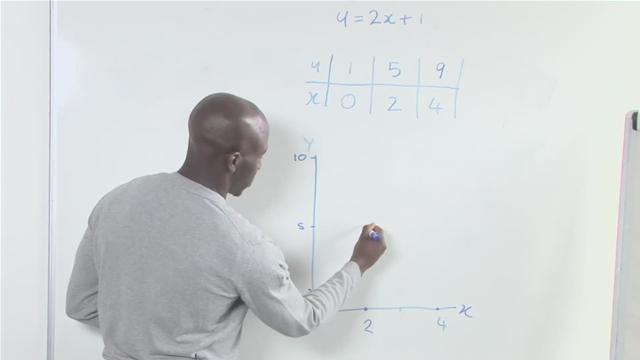
Build charts, graphs, or equations step-by-step.
Use every strategy you can find to help students keep their minds focused exactly where they need to be focused. This is invaluable for distractible students.

In math classes, teachers should give at-the-board demonstrations. Just as with the fill-in-the-blank PowerPoints, this places the action precisely where the attention should be focused.

Circle numbers and draw arrows—in general, do whatever is necessary, so students can not only see the process in action, but also be able to reconstruct how it was done, when they are called upon to practice the skills just demonstrated to them.

Thus, when you show them an equation, chart or graph, it is much better to create it or draw it out sequentially, rather than just show the finished thing.

The best overall class format for distractible students is 15-30 minutes of instruction, followed by a chance to immediately practice the operation and ask questions before the end of class.

Guided practice helps all students, especially distractible ones.
Some schools have begun to experiment with flip-flopping the traditional order of lectures-in-class, practice-for-homework. Students are given information-delivery assignments (often in the form of lectures on video) as homework, while active practice with a teacher present happens during class periods.

The value of this approach for distractible students depends on the students' ability to be organized enough to watch the videos, read the material, etc. This is a big "if," since organization is a huge challenge for most.

But when they can do the homework, flip-flopping could work well for ADD students. If the information-delivery is well organized and the student can go back to review parts that s/he may have "spaced out" the first time, it could actually be easier for them to follow completely, than a "live performance."

This approach also allows for guided practice, and helps maximize the teacher's ability to work one-on-one with students (always a "plus" for the distractible ones). It cuts down dramatically on students practicing skills incorrectly, and hands-on practice under the active guidance of a teacher can be extremely motivating for students both to complete the work and, crucially, to turn it in (you might be amazed how difficult it is for many ADD students to remember to hand in completed work!).

Foreign language or language-arts classes:
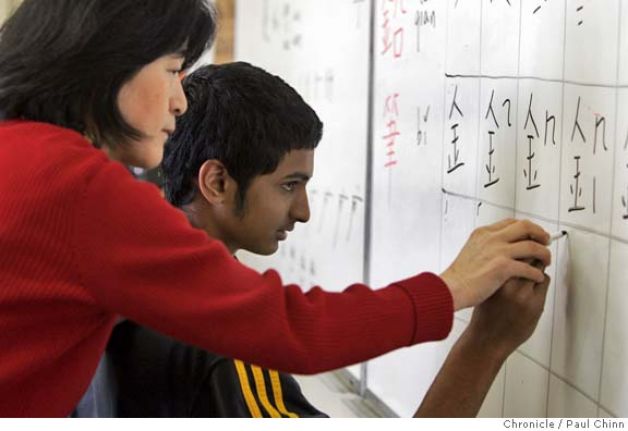
Correcting misunderstandings at the board in Mandarin class.
Have randomly-chosen students start the class period with answers to previously-assigned questions or grammar problems at the board. Follow this with a discussion, making use of both students' mistakes and things they got right.

The idea is not to humiliate students--the last thing you want to do is give ADD students a reason to feel stupid (see Part II of this series).  Rather, the goal is to give students a way to make sure they are all beginning the class on the “same page.”

It is particularly important for distractible students to be able to find "landmarks" that help them "keep their place," and see how a particular factoid relates to the bigger picture. When attention is snapping in and out of focus, such a structure can be extremely helpful.

Signy also suggests that language teachers should structure written vocabulary tests as word searches: find terms from the vocabulary list on the front of the page, then match them to definitions and require students to spell correctly on the back. This helps scattered minds assemble clues more reliably, so they can demonstrate what they truly have learned.

IMAGE CREDITS: The photo of the chemistry students in goggles is from the Hawaiian Mission Academy K-12 website’s Science page. The photo of a teacher (identified as "Mr. Charles") giving a step-by-step demonstration of how to graph a linear equation is from VideoJug. The image of a student teacher from University of Missouri-St. Louis guiding in-class practice work is from a page of photos from 2005. The photo of the student and teacher at the board writing Mandarin characters is from an article about Mandarin classes from the San Francisco Chronicle online.

Tuesday, December 11, 2012

ADD-Friendly Classroom Management


Part II of a 3-part Series:

Recently I sat down with my daughter Signy Gephardt, who was diagnosed with ADHD in the first grade, and who graduated from college last May. I quizzed her about “best practices” from a student’s point of view, and she shared a few ideas that all teachers may want to consider, if they hope to help their more distractible students succeed.

This is Part Two of my notes from that discussion.

How does your class start an early day?
Keep it interesting!
If you have a really early class (8:30 counts as early), some incentive needs to be available as an added reason to show up and tune in: take up a collection for coffee and bagels, or something (decide as a class). However, don’t allow refreshment to be more of a distraction than a help!

If you have to take attendance, ask an engaging question—requiring responders to answer with comments about personal experiences or opinions, but with no “right or wrong” answer. Students answer the question as their check-in, for a much more interesting class-opening than listening to students rattle off “here!” repeatedly.

Keeping your classroom and your routines well-organized will help
all your students, especially those with ADD.
Organize for success
Do all you can to help students not to feel stupid. With their wandering attention spans, ADD students frequently do feel embarrassed when they are caught being distracted, and are unsure what you just asked. Consider this when you structure questions, and find ways to help them “find their place again” without losing face.

ADD and ADHD students have a lot of difficulty organizing themselves, because their minds are pulled in a million different directions all the time.

Structure your class routines to help students stay organized: use regular, predictable routines, explicitly teach age-appropriate organizing skills (sequential processes for younger students, how to use time management and scheduling tools as they grow older, etc.), and allow time for students to file notes, gather homework, make sure they turned things in, etc. As appropriate, encourage parents to help with similarly organized structures at home, or offer older students tips for keeping themselves organized.

The teacher in the kimono-looking Yukata, presenting a PowerPoint to his class, is
Martin Boyle. He was student-teaching under the supervision of Judy Flamik in 2010,
and talking about Japonisme to a high school printmaking class in Ohio.
He is doing many things "right" for any of his students with distraction issues.
Presentations that hold attention
Remembering their distractibility also is important when you structure presentations. If a presentation approach is too simple-minded, ADD students’ attention will quickly wander. These guys can double- or triple-track with ease, and they can’t abide boredom.

Making PowerPoints available at least 24 hours ahead of time to college students, to download, print, and bring to class, or just providing printouts of them to younger students, is extremely valuable. Students can make handwritten notes on the printouts, and they’ll be sure of having all the information they need.

Taking notes on a computer may be a good focusing tool--or it
may open a world of distractions. Handwritten notes also may
be a good idea, or create problems.
Computers: good and bad
Computers are an extremely mixed blessing. They are a powerful tool and an indispensible part of modern life—but the Internet is also a powerful distraction. Know for an absolute FACT  that if your classroom has Internet access and you do not have “master control” over your students’ computers, many students will be shifting from tab to tab during any class activity, and they’ll have several programs and websites open simultaneously.

There will almost always be some students who really do have only their notes up, and who are paying attention.  Others will only have notes up, but will be texting or playing a game on their phone (computers aren’t the only electronic distraction!), or just simply spacing out.

Taking notes on a keyboard may be a good focusing tool for some, depending on several factors—especially if they type well, and can type faster than they write by hand. Some students’ penmanship is so bad they can’t read their own handwriting, so the ability to type their note is extremely helpful.

Taking notes by hand can be a good “focusing approach” for many ADD students, however, especially for “fact-heavy” classes, as long as you allow them to doodle in the margins as a self-quieting aid.

In Part III, we'll examine Signy's advice for teachers of specific types of classes.

PHOTO CREDITS: The coffee-and-bagels photo is from the Castle Braid website. The organizational aids for the classroom are from the “Classroom Options” page of the Innovative Literacy website. The photo of Martin Boyle giving the PowerPoint presentation is from Boyle's blog, "Portrait of the Artist as a Young Mannequin," copyright 2010 by Martin Boyle, and is used with his permission. The photo of students taking notes—one with a computer, while another takes notes in handwriting—is from the blog Chron (Houston Chronicle online), specifically an article by Gina Carroll, on the relative merits of handwriting versus technology for note-taking.

Wednesday, November 28, 2012

ADD-Friendly Classroom Arrangements

Part I of a 3-part Series

What if ALL  your students had ADD or ADHD?

Students frequently are diagnosed with ADD or
ADHD when they are in early grades.
That may sound like a teacher’s worst nightmare—or, depending on the class, maybe you feel as if you already do have an all-ADD class!

In any case, I have felt for a long time that, whatever the reasons for recent trends of steadily-increasing diagnoses of ADD and ADHD, the fact that these students often have such a tough time in school should inspire all teachers to make their classrooms more ADD-adaptive.

I also think it is a serious mistake to label the condition a “disability,” (even if that label sells more drugs). It doesn’t have to be one. I’d rather think of it as a DIFFERENCE—a different learning style and way of perceiving the world that has characterized many of the great creative and entrepreneurial giants throughout the centuries.

Recently I sat down with my daughter Signy Gephardt, who was diagnosed with ADHD in the first grade, and who graduated from college in May. I quizzed her about “best practices” from a student’s point of view, and she shared a few ideas that all teachers may want to consider.

Suggestions for Classroom Arrangements:

A U-shaped arrangement puts
all students close to the teacher.
The ideal is to put every ADD student directly in front of the teacher—in front of his/her desk, or right in front of the podium. That would not be possible in an all-ADD class, but there are a couple of almost-as-good solutions.

A U-shaped desk arrangement around the teacher, not too many students "deep," is a good arrangement, unless you want to show a lot of PowerPoint-type presentations—in that case, a U-shape may hinder visibility for some.

A shallow rectangle arrangement, also with not too many students “deep,” works okay, and might be better for showing PowerPoints.

It also is helpful to have desks or chairs that can be re-arranged quickly and easily. As we will discuss in more detail next time, small-group discussions can be a helpful tool for keeping ADD students engaged. Reconfiguring the room to facilitate small groups can be a great distraction if the furniture is hard to move, however.

This visually stimulating classroom would be 
overwhelmingly distracting for many ADD/ADHD students.
Walls should either be blank (Signy’s warning: “BOR-rrrring!” but at least not a distraction), or covered with RELEVANT information. To be relevant, information should be focused on whatever the topic of this lesson may be. When it is relevant, it provides something for distracted minds to “bounce against” that is focused on the learning at hand and “bounces them back” on-topic.

Irrelevant information—which is any material that provides information about something other than the lesson at hand—distracts. The more attractively it is presented, the more powerfully it distracts!

In other words, all those inspirational posters about attitude, respect, or stick-to-itiveness, while meant to motivate students, are incredibly distracting to an ADD individual, unless the topic of your class work at the moment is attitude, respect, or stick-to-itiveness.

Point desks away from the windows, whenever possible.

IMAGE CREDITS: The photo of the classroom full of children is from the Buzzle website's page on "Hyperactive Children," an article on ADHD. The “U-shaped” classroom diagram came from an interesting discussion of Room Layout on the Teaching and Learning website. “The classroom is a gold mine of information," wrote the author of the cutline for the classroom with varied display of posters, etc. The photo is from the James Dinan School.

Tuesday, October 23, 2012

A Change to "Comments"


I recently discovered that I have been making it harder to post comments to this blog than I had intended, because I was using Blogger's default settings. I have now changed the settings.

Many thanks to Lynette Burrows, who heightened my consciousness about this! Her blog Of Martians and Marshmallows is well worth following,  if you are interested in science fiction, writing topics, or thinking about things in general!

IMAGE CREDIT: Many thanks to the Shapeshed blog, for the "Post a Comment" image!

Thursday, October 11, 2012

If it's Visual, is it Automatically Stupid?

Note: this is a re-post from Artdog Observations:
I recently saw an item in Education Week about an effort by the group Reading is Fundamental to incorporate the arts into the teaching of the STEM disciplines--that is, Science, Technology, Engineering and Math.

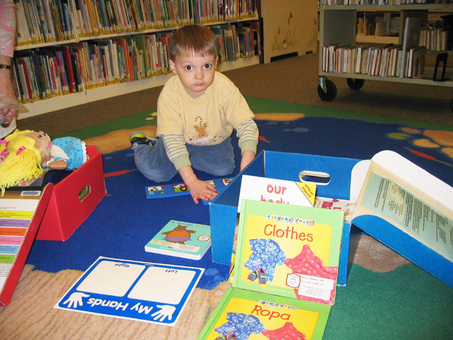
Early childhood literacy is vital--but what happens later?
I let my imagination play with that idea for a while, and quickly thought of many ways we could have developed arts-based explorations of these disciplines for high schoolers in any of the places where I have taught.

The things I was thinking about would not have "diluted" the teaching--indeed, some of them would possibly have invited greater depth of thinking than some of the assignments I knew were actually being given in STEM classes at that time.

I was a bit disappointed, therefore, when I realized the RIF arts-integration program is targeted only for early-childhood literacy in the STEM disciplines.

It's not that I have anything against early-childhood literacy! I am a strong supporter of the 2000 Book Movement, which promotes the reading of at least 2000 books to all children before they are 6 years old.* Early childhood literacy is vitally important, and worth a great deal more investment and interest than we currently give it in the US.

But I balk at the idea that preschool is the only place where an arts-based approach is a valid gateway to learning. Simple picture books and preschool jingles can have quite grown-up analogs, though we too-rarely see them. The potential for richly-engaging Arts/STEM experiences for students (and their teachers) is truly vast at all levels. If managed well, such an effort could be a major game-changer for many people of all ages.

This is how many students feel about STEM.
Why? Because the deep psychological need that the arts fulfill for human beings is to provide access to new or difficult ideas. The arts give us an instinctual "vocabulary" or "set of tools" for thinking about confusing or unknown things. That's the deep-level reason why we do them at all: because the arts are an essential survival tool.

When the world confronts human beings with things we don't understand, what do we do? We hypothesize about them by telling ourselves a story about them, or creating a visualization, or singing or dancing how we feel about them, as seems appropriate.

How does that translate to the question of how we teach the STEM disciplines? Well, we seem to have trouble getting students to feel attracted to them, for one thing!

Generally, STEM materials look pretty dry. It's a consistent turn-off that
is totally unnecessary, in my opinion. We have ample ways to improve,
the teaching of Science Technology, Engineering and Math, using the arts.
Why do students resist the STEM disciplines, even when they are "required"? The reasons I hear most often tend to be that "they're hard," or "I don't understand them," or "they're boring!" (that last is often said with rolled eyes and a bit of a whine).

How better, then, to make them more accessible--even to those whose "primary intelligence" is not the "math/logical" one normally associated with those disciplines--than by using the tools that humans have developed over the ages as a survival necessity, precisely to help us successfully "fathom the unfathomable"?

How better to interface with the STEM disciplines, on ALL levels, than through the arts? Yet I can already hear critics attacking the idea for higher grades and college, for fear it will "lack rigor."

I long ago came to the conclusion that what most laypersons mean by "academic rigor" has little to do with in-depth critical thinking, and a great deal to do with memorizing longer lists of facts, dates, and equations, but it really seems to me that there is a prejudice in our culture, to the effect that if it's visual, then somehow it's been "dumbed down."

Roots of Human Behavior has unexpected depth--but
also "sells itself short," I fear.
A better realization of the depth that is possible with a visual-along-with-verbal approach came to me recently when I read/viewed a book titled Roots of Human Behavior by Viktor Reinhardt.

Published by the Animal Welfare Institute and clearly aimed at a popular audience, Reinhardt presents some basic--and not-so-basic--ideas about human and animal behavioral parallels, gleaned from his years of research, and he does it in a series of fascinating photos.

Unfortunately, the editorial staff for AWI seems to have bought into the idea of visual-as-dumbed-down, because Roots of Human Behavior sometimes reads like those sappy feel-good emails people send that end "if you care about someone pass this on to them" (you know the ones: they tend to have sparkly angels and animated GIFs).

However, the images themselves in this book are a great example of pictures conveying far more than could be explained with a great many un-illustrated words. I came to the end of the book with a weird feeling of having read something much deeper than it seemed to be--yet not as complete as it should have been.

I'd like to see a textbook on this subject, illustrated with exactly the same images. I bet even high school kids would be willing to put up with what they might otherwise have considered "boring" equations, tables, and technical definitions, if the textbook was illustrated with such a profusion of telling images.

As more educational materials go digital and interactive, I think we inevitably will see more and more visual and auditory approaches to material, in an effort to make them more interesting and accessible. We must guard against the tendency to "dumb down" the visuals, however. Let's use the arts (all of the arts) to help us get to the deepest thinking and the most profound understandings. After all, that's what they're designed to do!

_______________
*Note: Read more about the vital importance of early childhood literacy, especially as it applies to the African-American community, in the informative book, African Americans and Standardized Tests: The Real Reason for Low Test Scores, by Dr. Veda Jairrels.

IMAGE CREDITS: The image of the little boy with the early childhood literacy materials on the floor around him is courtesy of the award-winning Bernardsville (NJ) Library! Belated congrats, guys! (the award came in 2009).  The "math is hard" cartoon is from the Bilerico Project blog: an image worth 1,000 words, and aren't you glad I saved you reading them all? The collection of "dry stuff"--books, pages of equations, chemical formulas, etc., is composed of images from several sources. See the links in the previous sentence! Many, many thanks to all! I looked and looked online for a cover shot for Roots of Human Behavior, but eventually had to scan it for myself.